THE AMPUTATION OF MY SOUL, PART 1

I am continuing to write more about grief.

I remember grief well, but I am not bleeding anymore.

It is important to share that I do not feel anguished as I write about grief. Eighteen years have gone by since my son died. The agony did subside after ten years. I had no feelings at all for a long time after that – no pain, nor joy.

It was only this year that I discovered joy again.

When I was deeply grieving, I felt no one could understand my pain.

Yesterday, I remembered some lyric lines from my song, “Through My Music.”

“Through my music I forget, all the time I’ve wasted

Waiting for someone to ease my pain inside”

It is fascinating for me that I wrote such eloquent songs about grief before I ever experienced it.

Currently, I believe the world is full of grieving people who are terribly suffering.

For anyone grieving, the fact that I can sing and be joyful again might be unbelievable for them.

It was for me once!

People, who are in deep grief, probably cannot grasp that I grieved as deeply as I did.

It is only now at this juncture that I’ve realized how much I’ve learned through my grief journey. It is far less lonely for me now.

Once again, I speak about grief from my own, personal experience. I have connected with a lot of bereaved people since my loss, and many of them feel the same way and of course, some do not. All people are different.

“An amputation of my soul”

I really could describe my grief as an amputation of my soul.

It was not visible, but it left scars that are there FOREVER. For me, healing is actually an appropriate word to apply to grief. Healing implies a wound, and with wounds there are scars.

With my joy, I have chosen at this juncture to look at my scars in a positive way:

My scars allow me to understand how other people feel who are bleeding.

My scars allow me intense appreciation for my survival.

Through the grief process, I’ve compensated for the missing part of my soul. I adjusted and learned to live with it. It is process that will continue for the rest of my life.

I am writing as a response to a message from my friend, Sam. Here is an excerpt:

“I do think that a strong support system makes a big difference in coping with such a tragedy…it may be that only those that have had a similar loss can truly be supportive…but I am thinking that the support and sensitivity of those that haven’t had a loss of such magnitude is also vital…maybe its the insensitivity of the larger group that creates a need for organizations like Compassionate Friends.”

As far as coping with “insensitivity,” I believe that when I was “bleeding” I was in too much pain to appropriately interpret sensitivity. Simple, well-intentioned statements such as, “time heals,” actually upset me!

I really didn’t encounter too much thoughtlessness. I have always been fairly careful about who I’ve kept in my vicinity.

A “strong, support system” was certainly helpful; there was no doubt about that. But alleviating the pain of grief was not possible for me from any other human. Compassionate Friends existed for me as a place to voice these feelings; it was a place to express the sadness.

In Sam’s message to me, he insisted, “People in the past coped better with losing a child than people in the present; for a myriad of reasons. Here is an excerpt:

“I don’t remember the older members of my family or my wife’s family being burdened with profound sadness. In 1900, 11% of children born in the US died before their first birthday (today it is only 0.7%). Yet I have not seen any stories or writings that indicate that the members of that generation were exceedingly sad or troubled by grief. Maybe it was just a different time…no therapy or drugs, and there was a day-to-day concern for survival. But, I believe that the strong support available in communities that were much closer knit and involved with each other than they are today was really the key difference that made coping with tragedy easier.”

Of course, neither of us truly knows what other people from that past felt. The cliché of “appearances can be deceiving,” definitely applies here for me.

I will explain again why I do not believe that statement.

When my soul was amputated, it was my lifeblood that was pouring out.

If the entire population of this planet came to offer comfort, my lifeblood would have continued to pour from me.

I believe that with the “amputation of my soul” there was truly nothing that could stem the flow!

I have said before that I have lived all of the “stages” of grief. In my depressed stage, I was in bed and under the covers – there was no person who could comfort me there, certainly not my husband!

When I was angry, I didn’t want anyone there to comfort me. I told everyone to “leave me alone.”

My mother was probably my closest comfort. That is one reason why I’ve been so sad about losing her incrementally to dementia.

Once again, I don’t want to stop anyone from offering support or kindness to a friend or relative who is grieving. Other people’s caring was always appreciated!

However, I felt I had to reply to the idea that community support made grief “significantly” easier for humans in the past; that it alleviated their pain. It simply couldn’t alleviate mine.

I actually had tremendous, community support when my son died. We had meals brought to our home for months. I am forever grateful for the support I received.

However, with all of that support, my pain was still intense!

I wrote the words that a bereaved mother once told me it took her “seven years for her agony to subside.”

I highly suspect that intense, community support could possibly last that long.

There are also many people who are like my husband. He did not want community members “hanging around” for support. He did not want to talk about his grief, nor discuss it with anyone!

He did not want to be in a support group!

He was still scarred by his grief, but never speaks of it. Therefore, anyone who might meet him could say, “Wow, he has coped well!”

He may appear to have coped well, but his grief journey was as lonely as mine – even though I sought out support.

For these reasons, I do not believe grief was any different for anyone in any period of human history.

My discussion with Sam continued:

On Dec 14, 2010, Sam wrote:

Judy,

In 1900, 1 out of 8 women died during childbirth (at some point in their lives).  So, there was much more death that was experienced by an individual…and I think, based on what you have written, that you would expect that the grief in most communities would have been unimaginable.  And you point out that there was probably more stoicism, more silence.  But you would think that somewhere in our relatively recent history, such grief would have been documented in stories, theatre or music.

But, I don’t remember seeing or learning anything about it…maybe its there and I’m just unaware of it…but I really think there must have been a fundamental difference in how grief was experienced a century ago, and I think it is directly related to societal differences, including more religiosity, obligation, and sense of support within the community.  I believe that grief experiences have changed throughout our history, and the reason I keep coming back to this, is perhaps we can learn something from the past that we can apply to supporting those who are presently in need.

…Sam

My reply:

Hi Sam,

I wrote a lot about this yesterday. It was actually very thought provoking for me. I do not want to appear arrogant. I have to admit, I felt like I had a better perspective on this as a bereaved parent. But I readily admit that I have not researched this or even looked to see what people have written about grief and loss in the past. So actually, I am not qualified to address this at all!

However, even reading what you wrote just now, still does not have me convinced. If I could summarize my feelings it would be this:

I believe what you are expressing is that people coped better because they were better prepared. Death was a part of life and therefore, grief was something that was easier because it was familiar and everyone was supportive.

Here is my personal, view as a parent whose child died.

I have met bereaved parents who were religious and non-religious. They all have suffered!

I knew my child was very sick. I knew he wouldn’t live a long life. I was prepared to lose him so many times and again when I scheduled his surgery. In the past, perhaps it was expected to lose children. Well, I fully expected to lose mine. (This was intuitive; I never expressed it and tried to be positive). I was also in a cardiac child support group. Did it help me to see how other people coped with their child’s death? Not really.

So with all that preparation and knowledge that I would lose my child ahead of time, I was not prepared to deal with my grief. I don’t believe it helped me cope one iota better.

Yes it’s true; medical science made it harder by giving me hope. It might appear that it would have been easier for me if my child had died at birth. I used to think that way, but now I realize that it still would have been terribly painful (as many grieving parents would attest to).

When I’ve dealt with bereaved parents who experienced the “sudden death” of their child – it made me appreciate my time to “say goodbye” to my child, although I hated the disease.

I cannot imagine that if I were born hundreds of years ago without the benefit of medical science that I would have felt differently about this.

I remember elderly, wise and experienced, bereaved people trying to comfort me.

Once again, this is not just about death or medicine. This is about losing a piece of your soul when you say goodbye to someone you love forever.

I am not unusual. I don’t want to be a “poster child for grievers,” just because I have met so many people like myself.

Of course, I wouldn’t know about those people from centuries ago. But I know they were human, too.

Judy

Sam’s message included this:

“I think that there are quantitative differences in grief.  Even though you don’t like to compare, the anguish that people who have lost a child have experienced is far greater than what I have seen in the many patients and friends that have lost a parent.”

Yes, It could be true that the loss of a child creates more anguish. I can hardly believe what I am going to write below, because I used to be the most “grief centric” person on earth!

However, because I have seen a lot of anguish from other, grieving people – that statement is completely unimportant for me now.

I have witnessed tremendous anguish even if it wasn’t as “debilitating” as the loss of my child.

I have met a lot of siblings and grandparents who have suffered terrible losses. I have a good friend who still suffers over the loss of her life partner and another friend still mourning her mother. It might be many years later, but their lives are forever altered.

Their grief was also about an amputation to their soul and left scars.

There simply is no point for me anymore to imagine that my grief is deeper than theirs.

Grief is real, painful and very lonely.

Here are my truths:

There will sometimes be thoughtless remarks made by those who “don’t understand” what grief feels like.

There will often be kind, compassionate gestures made by those who want to understand and to help.

But in the end, grief is probably the loneliest journey a human faces when they lose someone they love.
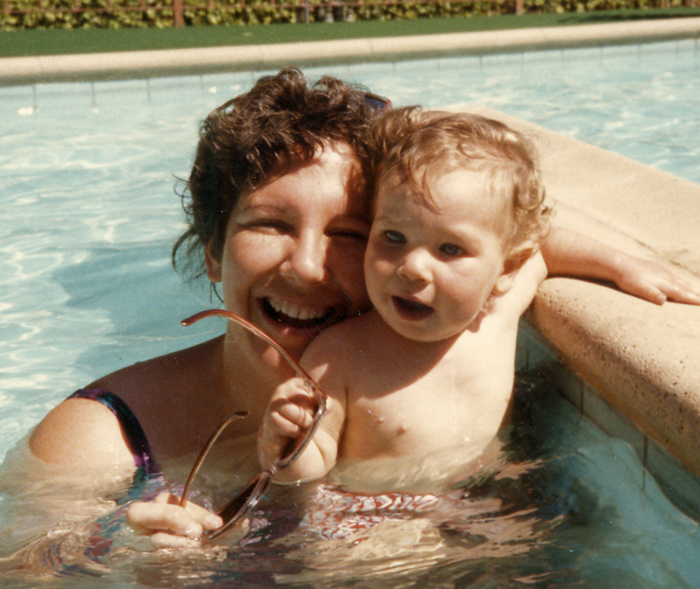
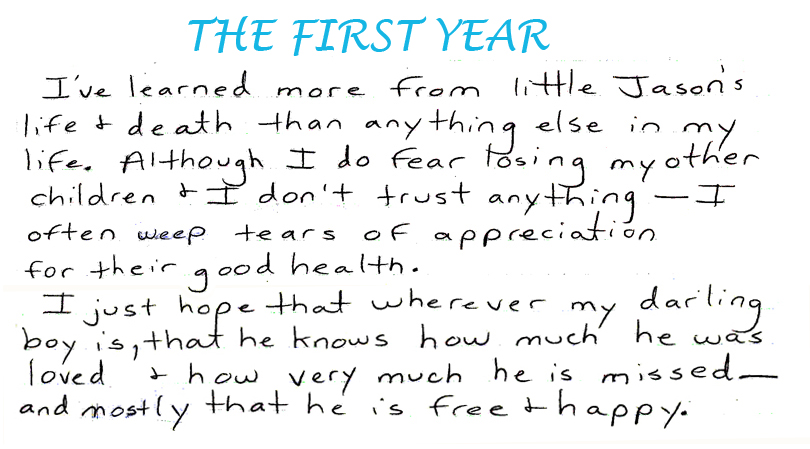
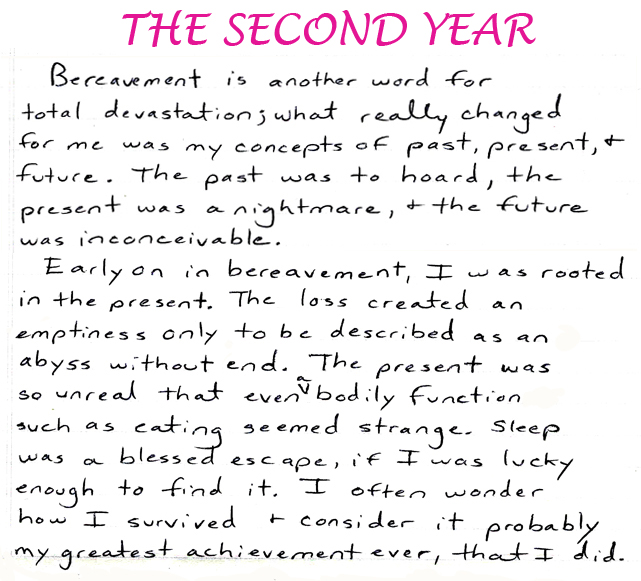
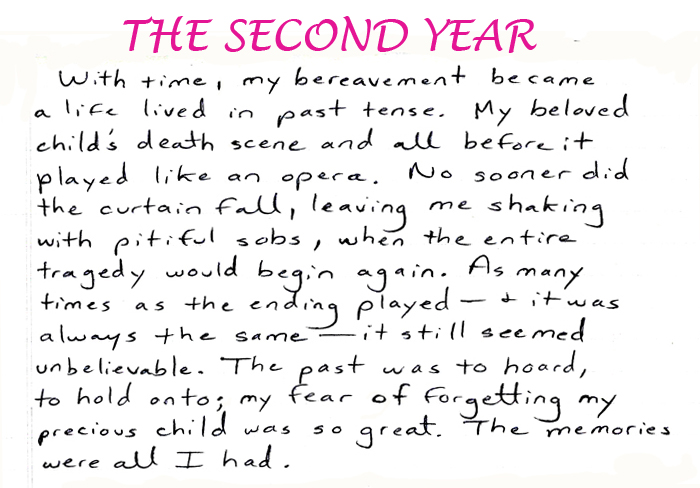
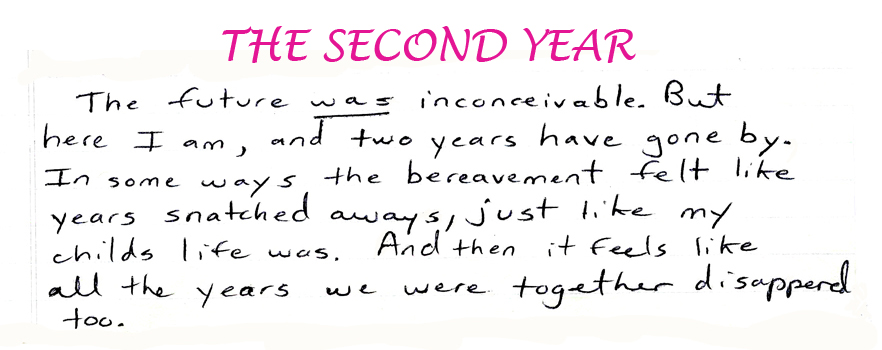
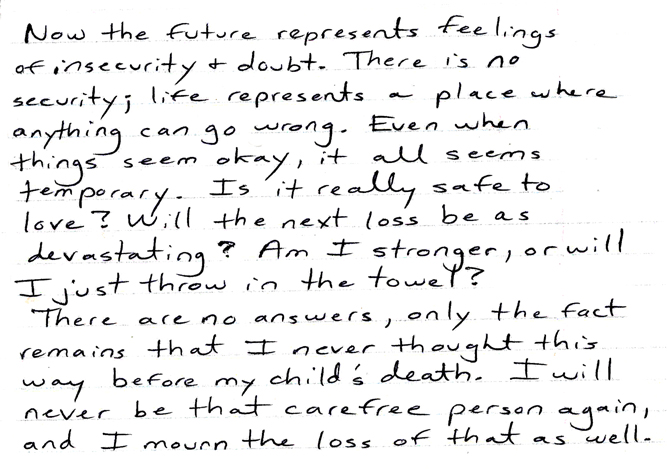
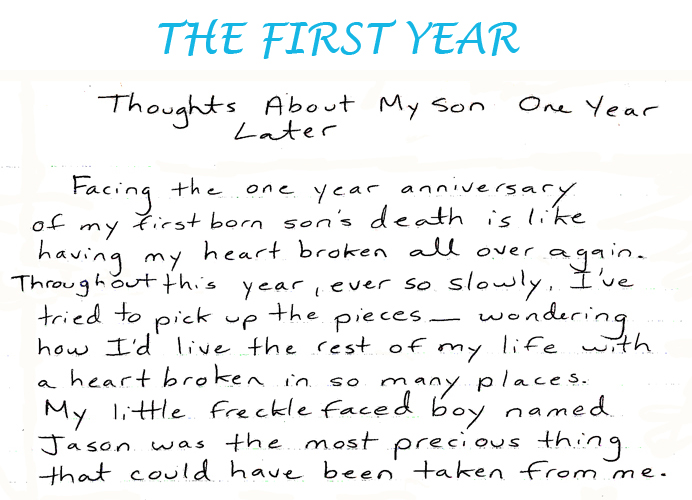
I AM NOW GOING TO SHARE THE WINDOW INTO THE AMPUTATION OF MY SOUL WITH THE WORDS I WROTE AFTER MY FIRST AND SECOND YEAR OF BEREAVEMENT.
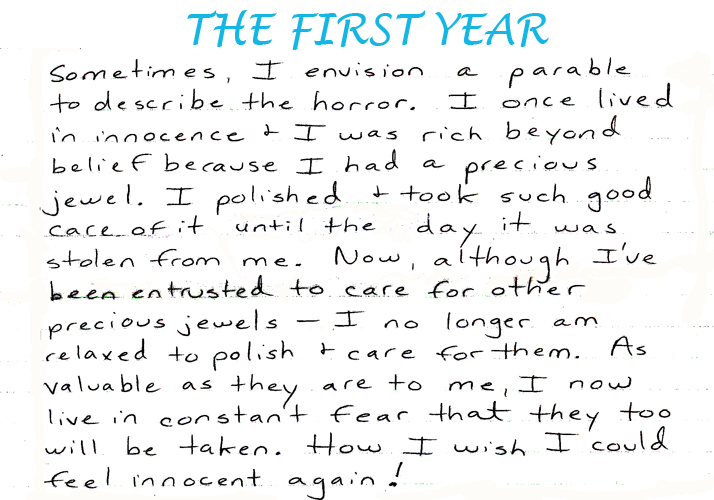
© Judy Unger and http://www.myjourneysinsight.com 2010. Unauthorized use and/or duplication of this material without express and written permission from this blog’s author and/or owner is strictly prohibited. Excerpts and links may be used, provided that full and clear credit is given to Judy Unger with appropriate and specific direction to the original content.
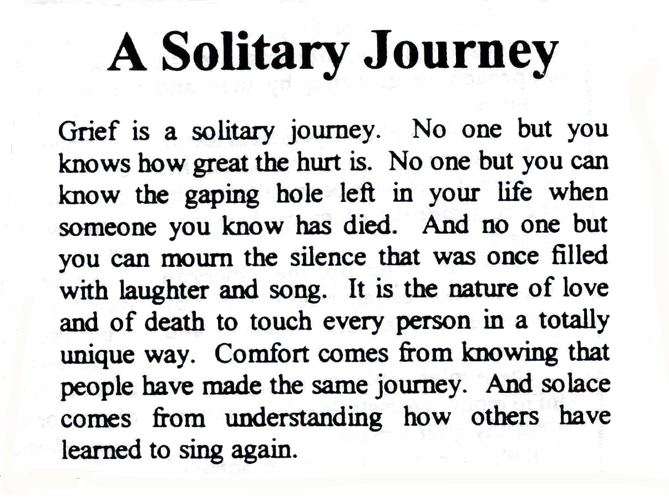
Posted in Grief Educational | Tagged , , , , | Leave a comment

TO FACE WHAT THE FUTURE BRINGS

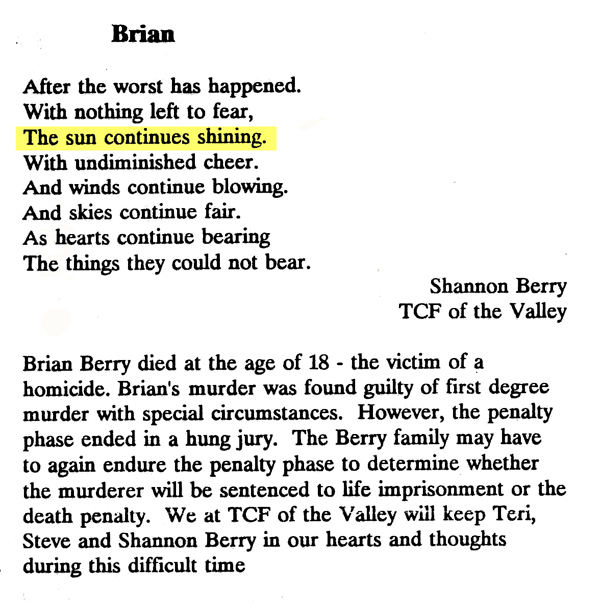
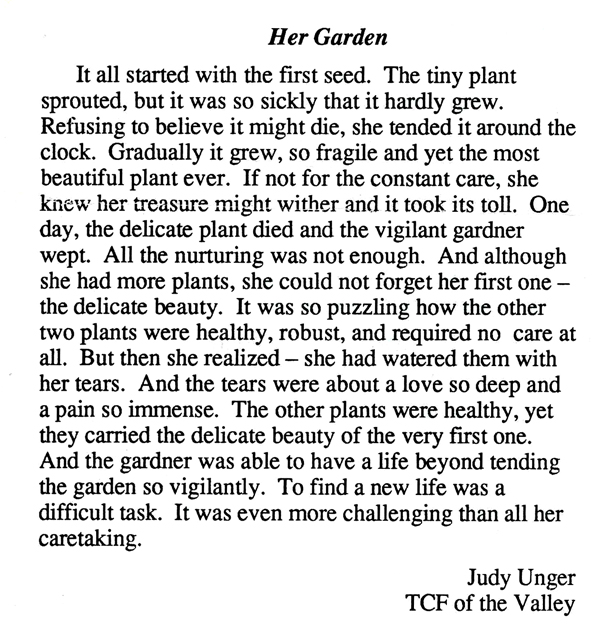
An amazing poem that I just found in a “lost folder.” I had clipped it from a Compassionate Friends newsletter. It was a perfect message for me and even included a last line about singing again! It was written by Helen Rice Steiner.

“THE SUN CONTINUES SHINING”

It was unseasonably warm. I had picked my son up from school for an appointment and we were finished. When he said he would love to stop somewhere for lunch, I thought it was a nice idea. I decided we could stop and get sandwiches; I’d bring one home for my daughter, too. I was thinking of a Subway Sandwich Shop and I remembered there was nearby.

As I headed that way, suddenly the memories flooded me. It was interesting and overwhelming. Why would I choose that Subway and why today?

There was a story for me with this and I could not help but write it.

I told my son what had crossed my mind.

I said, “We’re going to a Subway and this restaurant holds some very, sad memories for me.” Of course, he asked me why.

I told him. “I knew a woman. Her teenage son was murdered while he was working there. It happened late at night; he was shot in the head.”

Of course, my son wanted to know if there was still blood there. I thought to myself, I’m crazy! Why did I just tell him that?

We went inside to order the sandwiches. As we were leaving, I said to a young man at the register, “Did you know about the murder here? It was about 19 or 20 years ago.”

He shook his head indicating he had not. My son admonished me and said, “Gee, mom! Did you have to go and ruin his day?”

Although it was beautiful and sunny outside, my thoughts turned to the story I needed to tell. On my grief journey I have collected countless, sad stories; I remember each one very clearly.

Perhaps this is a story about “unresolved grief.” Teri was about the saddest woman I had ever met at Compassionate Friends, which is an organization for bereaved parents.

I remember Teri as kind, however her sad eyes told a heartbreaking story. Every story about a dead child is sad, for sure, however Teri’s sadness and anger were palpable for all the years I knew her. She could not contain her bitterness; her sharpness was off putting at times.

Teri was very witty and easily laughed, but she smoked constantly. It must have helped her cope. Her deceased son had a twin sister who was often at our meetings.

I cannot forget the story of her son, his senseless murder, and the wreckage of so many lives as a result.

I didn’t stay in touch with Teri after I stopped attending meetings. But until the last moment I saw her, her bitterness was very apparent. I heard she died of cancer a few years ago.

But today, I remembered her beloved son, Brian. Even if I have uncertainty about what happens with death, I like to imagine they are now “together” in heaven.

I am sad for those humans who are on the path of grief and anguish. My heart aches for them. I am especially sad for those who are in “zombieland” and might never experience true joy again in their life.

There was a reason I thought of this story. My insight is this:

I wish everyone in this world could find happiness again as I have. Unfortunately, there are no guarantees.

I can share my story, and I’m glad if it helps other people who are grieving to feel hopeful. When I clipped the words at the beginning of this post all those years ago, it probably gave me some solace.

At this moment, I feel so fortunate I found happiness again in my life!

I remember Terry.

And I will always remember Brian.

I came home from performing and I was tired. But I decided I wanted to look for something in my file cabinet; I was looking for a certain poem. When I started writing this morning, I wrote the line, “The sun continues shining.” I remember it was a line in a poem about Brian written by his twin sister. It was printed with some of my poems many years ago in a Compassionate Friends newsletter.

As I scoped through my file cabinet, I saw many stacks of grief articles and more recent newsletters. Then I saw that special, tattered folder. It was filled with many pages of my poems and words during bereavement.

I had looked for that folder before, but never found it. I did have a few, old Compassionate Friends newsletters in Jason’s box, which I scanned for earlier posts.

I glanced quickly at the pages; some were folded and others were written in pencil and marked over. There were photocopies, printed pages, and poems that I recognized from a long time ago. It was another coincidence for me that I had gone to that Subway and went looking for a certain poem.

At first, I could not read them; it was too painful. I pushed the papers aside. A few minutes later, I decided to try again. As I took in the written words, it felt like the “Judy of the Past” had come to visit me. There were so many pages of revelations there!

It was so eerie that I could hardly find a way to explain it.

How interesting it was to see that I already knew all the words I’d written in my neat printing. So many of the same concepts I had written on blog posts were there, despite the fact I had not seen my writing from long ago.

It was more than fascinating to visit with “Judy of the Past.” I don’t think she had any idea when she wrote those words, that some day a very, “different” Judy would be reading them.

Perhaps she might not have been so desolate if she had known about her transformation into “Judy of the Future.”

Or maybe she did know and wrote those words for a reason.

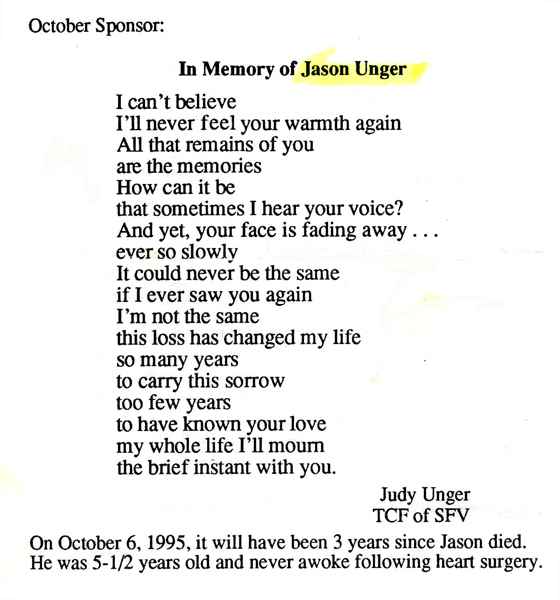
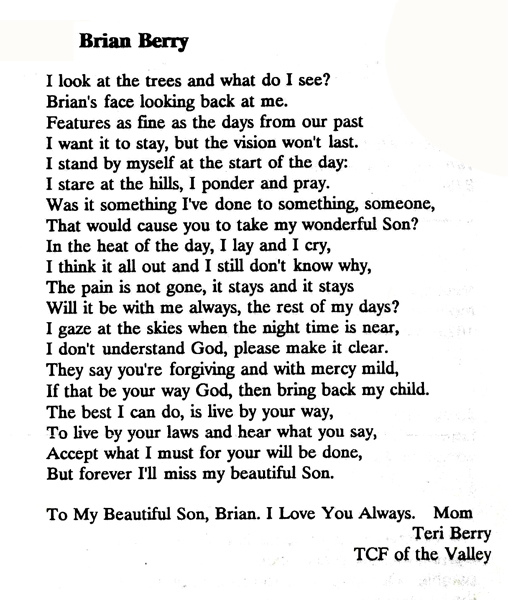
Below are the two poems of mine that were in the same newsletter with the poems about Brian.

© Judy Unger and http://www.myjourneysinsight.com 2010. Unauthorized use and/or duplication of this material without express and written permission from this blog’s author and/or owner is strictly prohibited. Excerpts and links may be used, provided that full and clear credit is given to Judy Unger with appropriate and specific direction to the original content.
Posted in Grief Educational | Tagged , , , , , , , , , , , , , | Leave a comment

WHEN I REALIZED YOUR ABSENCE WAS REAL

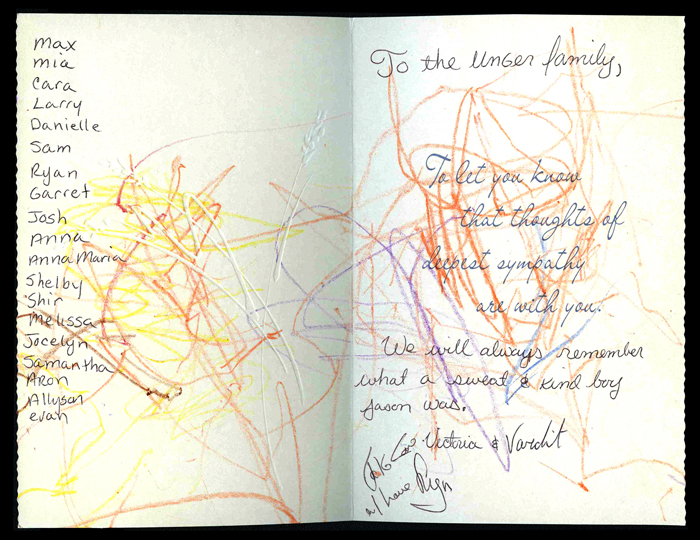
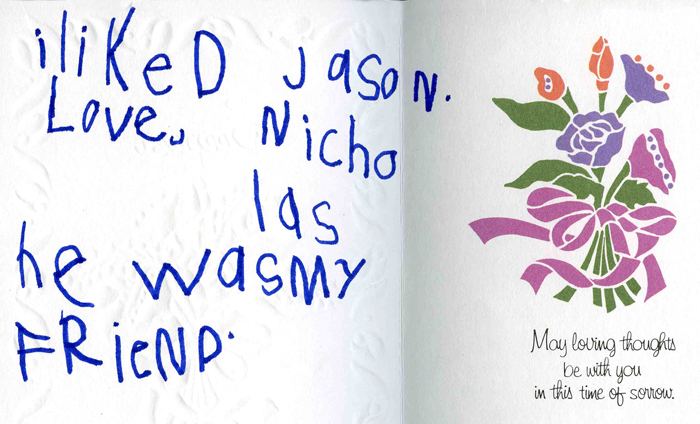
A sympathy card I received after Jason’s death from his preschool classmates.

“Difficult questions to ponder”

On Dec 6, 2010, Sam wrote:

Judy, I have a few, grief related questions:

1). What was the most isolating part of the grief experience for you? Was it that others couldn’t relate to your loss of a child because they just couldn’t imagine such a thing and didn’t go there? Was it that you isolated yourself from others because your experience set you apart, and made you “different” to the extent that you no longer had anything in common with most people? Was it that even others that had a similar experience could not be bonded with because they were hurting too much? I note that other grief experiences, such as the loss of a parent or sibling do not appear to be as intense, perhaps because it is expected that we will all go through this at some point, and thus does not seem unusual.

2).  I remember when I was speaking with my wife’s grandmother when she was alive, that she had lost several children (4 out of 12 I think). My dad’s mother lost a son to pneumonia.  My great grandmother had lost a child, I believe. None of them appeared to be impacted as much by grief as today’s parents are…I wonder why?  Was it the commonality of experience…I mean, it was almost expected that not all of your children would survive…no antibiotics, TB running rampant, poor surgical technique…I wonder if today’s medical advances have led everyone to expect that every child will survive?  Furthermore, many children that would have previously died at birth are being saved through heroic measures, but then may go on to live with significant disabilities, or even die a few years later. I wonder if it is harder on parents that have time to bond with a child for a short time, a child that would not have even survived a decade earlier?

3).  What would the Judy of today tell the Judy of 23 years ago if you could go back in time. Were you able to learn anything over the years that would have made your grief experience more manageable?

4). One of the responses you shared with me from the grief group sounded really desperate…almost suicidal (I think it was a woman who had both a stillborn and had lost a stepson).  Are suicidal feelings more common among parents that have lost a child? Are suicides more common? Has your discussion group ever had to make an intervention or tried to do so?

5). Do grieving parents wish that they had never had their child to begin with, if they were going to die so young? Is it better to have experienced their child for a short time, or better not to have known their child at all? (Theoretical to be sure, since no one is given that choice, but the answer probably strikes at the core of how a person has dealt with their own experience, and the level of growth they have achieved.)

Judy…I certainly mean these questions to be thought provoking, definitely not pain provoking! … Sam

On Dec 6, 2010, Judy wrote:

Wow, Sam. Thanks for taking the time to write this.

I think I could write a lot – boy, you’re going to really help me write that grief book!

Judy

“Honest answers to difficult questions”

Up until now, I have tried to speak about grief in general terms, but at this juncture, I am speaking about a particular loss, the loss of a child.

1) REGARDING ISOLATION

It is unanimous that losing a child is one of the hardest losses because it does go against the laws of nature. Parents are supposed to die first; they are not supposed to outlive their children.

I’ve tried not to say that too much because I’ve wanted to get away from comparing grief.

When I watched a friend who lost her mom suffer a lot – I didn’t feel better thinking, “Mine was worse.” Often, people have said to me, “I shouldn’t complain about my loss – yours was so much worse!”

I never want anyone to discount their grief anymore in that way to me ever again. It is simply not helpful for either of us!

Regarding isolation, all of my comparing was because it seemed like no one could understand my level of pain.

I have said before, I was “grief centric.” I went through a period of time where I was certain “mine was the worst!” I was even smug about that! If it were an adult child that had died, I felt my situation was worse because of all my “involvement” with Jason’s care. If it were an infant, I felt I had more time to bond and therefore, I suffered more with Jason’s loss.

I have felt terribly sad about what our supportive friends, Josh and Jeanne endured. Many of our other friends (including myself!) came right out and let them know that they had “only lost a baby,” and that it wasn’t comparable to our situation with Jason! I am amazed that it did not deter them from continuing to hang around to comfort Michael and I.

As I learned from my Romanian friend, Magda, I was very wrong about this comparison! Magda has severe, progressive MS and I wrote about her on Post #8 TENNIS, THE THREAD IN MY LIFE’S FABRIC.

Here is a message from Magda that I received today:

On Dec 9, 2010, Magda wrote:

PAIN IS DIFFERENT BECAUSE WE ARE DIFFERENT…NOW IT IS OK FOR ME TO SAY IT WAS BETTER MY SON DIED AFTER 10 DAYS INSTEAD OF A DISABILITY TO MAKE US BOTH SUFFER.

I NEVER WAS OR I NEVER WILL THINK OF SUICIDE BECAUSE OF MY FAITH IN GOD…I WOULD LIKE TO TELL THOSE PARENTS SUFFERING THAT I’LL PRAY FOR THEM…THEY NEED SOME TIME TO REALIZE THEY ARE NOT ALONE AND ALL OF US SOONER OR LATER GO THERE!!!!!!! LOVE YOU, MAGDA

I know that faith in god has sustained and comforted many people in their grief. I am envious of that, because I have always been “uncertain” in my beliefs. I have my moments of spirituality, but not with confidence.

I know I have written that, “I wanted to die.”

That statement is less about feeling suicidal and more about how difficult it was to live with so much pain. It really did seem like there was no “end in sight.” I believe my hope of recovery revolved around just “hanging in there.” I focused on the baby that I was carrying, as well as trying to alleviate the pain of my oldest son’s grief at the time.

I was isolated simply because my existence was completely “out of the land of the living.” I marched to a different beat than other people because my thoughts were repetitive and anguished. It was only a plodding existence at best. All of my energy was forced into simply surviving for the sake of my living children.

I remember I would just spend an entire day sitting on the couch with my three-year-son watching videos of Jason. It kept Jason alive for a while. It helped my non-verbal child cope with the silence, by filling our house with Jason’s singsong voice.

My other son was three when Jason died. He did not speak until he was five.

2) REGARDING BEREAVEMENT IN THE PAST AND THE PRESENT

I personally cannot imagine there is any difference between the loss of a child in 2010 and the loss of a child for a Neanderthal. I am certain there has been significant misery throughout history whenever children died.

It is a primal, human attachment to protect our child. It might just seem like people are more impacted in the present because it is talked about so honestly and openly. I imagine that perhaps child loss was so prevalent in the past; there were a lot more people to offer support.

Just because losing a child was more expected in the past, I don’t think it was less painful for parents. I remember reading something Abraham Lincoln had written about losing some of his children – his words were painfully honest and spoke as any parent today might.

The only reason it might appear that elderly people have “coped well” is perhaps because many years have passed since their child died. I don’t like to use the term that “time heals,” but with time – the acceptance and distance certainly does diminish the intense pain.

Often, bereaved parents feel safer expressing their pain with others that have gone through it. It is truly like a “club” in that respect.

On Dec 9, 2010, Lori wrote:

I remember once talking to my brother-in-law’s mother, who had lost 1 of 9 children.  She spoke to me about her child as if he died yesterday, when he had actually died 30 years before. My brother-n-law told me he had never heard her speak about her dead child like that to anyone. In fact he said he had never heard her talk about him to any of her living kids. I think she spoke to me about him because she knew I could relate to her. Maybe she never spoke about him to her kids because she didn’t want to burden them with her pain. I don’t believe parents in the past were not as impacted by grief as parents today. I think they didn’t express it as freely and kept it to themselves.

Having lost a child and a parent I definitely feel that there are two, separate types of grief. When your child dies you grieve for the future you will never have with them. When a parent dies you grieve for the past you had with them as a child, and the future that they will never know their grandchildren.

Love, Lori

I want to answer Sam’s question about bonding and medical science extending lives. I was aware that Jason would never have lived beyond a few months were it not for his first surgical procedure.

My feelings on this subject are definitely in the minority. I have heard over and over how grateful bereaved parents were for the time they had with their children. Because I felt differently, that often was difficult for me.

I actually wished Jason had died when he was an infant. Medical science kept him alive, but it was much harder for me – probably for him, too. My life with him was intense and exhausting. Although he had smiles and I had memories of him, there was so much pain associated with those five years. I often felt like my youth was stolen away and I had so much less energy to parent my other children. I used to feel “guilty” expressing these feelings, but I’ve learned that honesty has helped me.

Because I feel Jason’s love in my life, I know he would want for me to feel better and express this.

3) JUDY OF THE PAST AND JUDY OF THE FUTURE

This question was very interesting for me. First off, I’m fairly certain my thoughts about grief haven’t changed over the 23 years. I hold all the same values and beliefs as I did early on in my grief.

If I were able to go back and talk to myself, I would have liked to tell Judy of the Past that she would someday sing again. I don’t think she would have been able to hear that, because it didn’t seem possible. She would not have believed it.

Perhaps my story might help others, but not while they’re in deep grief – When my grief was fresh and raw, it used to make me angry to hear about how others had recovered. I assumed they didn’t have the attachment I did. I also hated the word “recovered.” Most bereaved parents will say, “There is no recovery, only acceptance and adjustment. It is forever.”

Still, I would want my book to be inspiring. I think my story is more about how I exited “Zombieland.” It is one thing to experience pain, and another to live without any emotional connection to life.

I was kept in that existence for decades because I was a caregiver. I never was able to truly let go of grief because too many challenges continued to come my way.

I think there are a lot of people like that.

4) SUICIDE AND BEREAVEMENT

I don’t feel qualified to answer this question. I experienced hearing countless, heartbreaking stories from anguished humans. However, because it became routine – it was generally not cause for “suicide intervention.”

I used to meet regularly with a few, bereaved moms on a weekly basis. I remember them all talking about the fact that none of them used seatbelts anymore. They really didn’t care if they were killed in an accident. I understood, but still wore mine.

Sadly, I’ve watched people deteriorate through the pain of their grief. Heavy smoking, drinking, drugs, and self-medicating is extremely common. Also, the stress often destroys one’s physical health over time. Divorce is commonplace.

When a child dies, a whole family is affected – especially sad, are the siblings who long for their parents’ attention and comfort, but have also lost their parents to grief. Grandparents suffer tremendously, as they grieve their grandchild and watch their beloved child’s heartbreak unfold.

5) WHETHER OR NOT A CHILD MIGHT HAVE LIVED

This is a very difficult question to answer. I have pondered this question in the past, and it was always confusing for me. It wasn’t helpful and never led to comfort. I have always wished that I could have avoided the experience of grief and anguish.

My answer was always an unequivocal, “I wish Jason had never been born and that I had never suffered such a loss.

I just finished writing that I have also wished Jason hadn’t lived as long as he had due to medical science!

But my insight has come to me. I have changed my thinking after twenty-three years of grief!

I was about to go back and change what I wrote only a few paragraphs ago. But I won’t. I’ll leave it there to remind myself that my insight hit me at this moment!

It was only this year that I discovered so much joy.

I would not trade 23 years of grief for the joy I’ve experienced this year with my writing and music.

Working through my grief allowed me to do something I never dreamed was possible.

If I hadn’t experienced Jason’s death, my life would have been ordinary. I might never have written so many stories and songs as a result.

With my own death, I would have left this earth without leaving a “mark.”

Now I feel my life is truly meaningful.

Jason definitely left his mark and will live on through my music and words.

On Dec 10, 2010, Sam wrote:

Judy, I’ll take some time here to respond to the following thought:

You wrote to me yesterday these words:

“I had wished Jason had died when he was an infant. Medical science kept him alive, but it was much harder for me – probably for him, too.”

I’m sure that was a very hard sentence for you to write.  And I’m sure that many others have reminded you about the good times that you two had together…they are obvious even in your pictures!  Who wouldn’t want their child to “love them more than all the cities”?  That’s priceless!  But still, knowing that you have considered all of this…those memories are still overwhelmed by your grief!

But, lets look at this another way. Jason is the central person in your life, the focus.  He was so important to you and your being that you were writing songs about him before he was born!  And I think that one of your great tasks in life is to change the above sentence…to make Jason’s life so important that it is unthinkable that he shouldn’t have been with you for five years. You have already started to do that…by being involved in compassionate friends, by writing your blog, by writing to the grief forum, and by all the counseling and sharing you have done that is not documented in an email or blog.

And the more that you can do to help others understand and survive their own grief process, the more you bring justification to Jason’s life, and bring those five years meaning. Do you see? Jason’s mission in life was to help you understand your mission in life. He could never have accomplished that if he died as an infant, and every day that you spend using your insight and wisdom to help care for others slowly changes the above sentence to the point where it simply isn’t true.

You bring tremendous merit to Jason’s existence (which is solely by your choice…no one is making you do any of this), and I hope that you won’t minimize or discount the importance of what you are doing…for others, for yourself, and for Jason. Have a good day!…Sam

On Dec 10, 2010, Judy wrote:

Wow, what an interesting morning I’ve had!

I woke up early to write more as a follow up to my last post about grief.

I know you are a busy doc, so I’m honored you have found the time to write as much as you have. If there is a purpose for everything, including Jason, then I think there was a purpose to your coming into my life again after 30 years. You have re-ignited a lot of serious thought for me and that has been outstanding! And of course, more than that – your caring is obvious.

Okay, before I dash off to go slug a few tennis balls (I have not exercised in a week and I can feel it) I want to share something with you.

I finished my follow-up of writing this morning before I got your message.

I came to the realization of what you just wrote me all by myself.

How interesting that my realization was about how sharing my music and writing has helped me personally so much. The irony is at the same time I am helping other humans – what could be better?

Judy

On Dec 10, 2010, Sam wrote:

Hi Judy,

We were essentially writing the same thing at the same time! I am so happy that you came to the realization on your own…in that light, one last thought…I would change the line:

If I hadn’t experienced Jason’s death

to:

If I hadn’t experienced Jason’s life

Sam

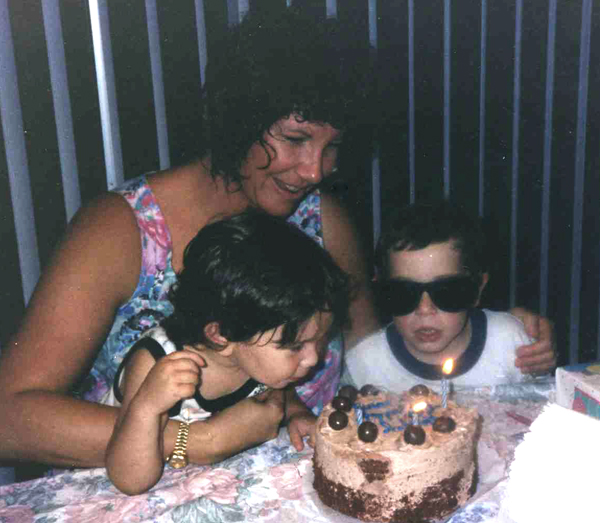
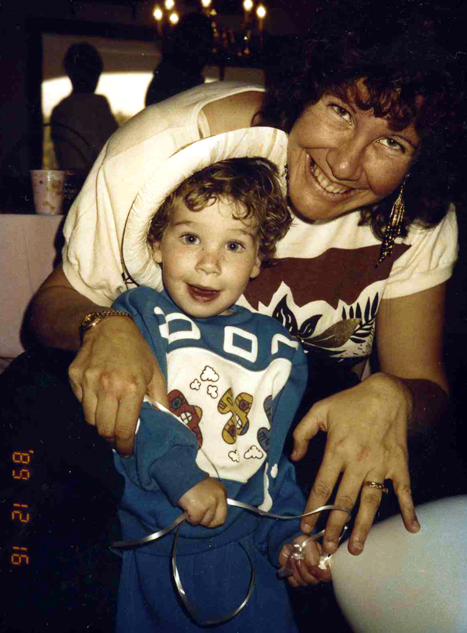
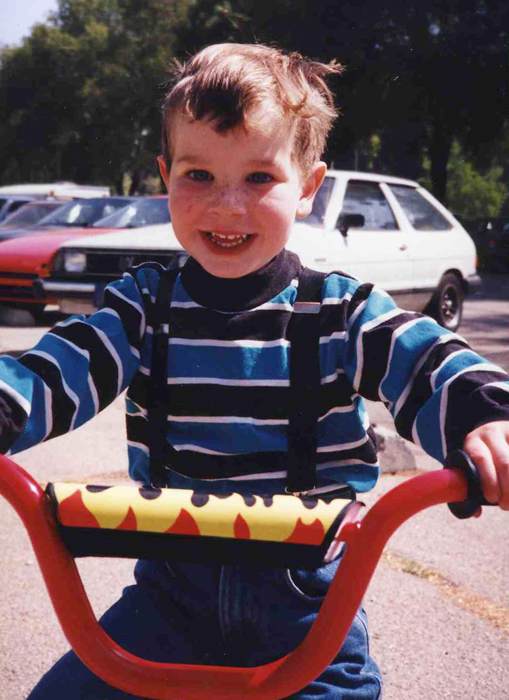
This is the last picture of Jason. It was the night before his surgery. We decided to celebrate his brother’s third birthday a week early. It was the last time we celebrated that birthday for many years.

© Judy Unger and http://www.myjourneysinsight.com 2010. Unauthorized use and/or duplication of this material without express and written permission from this blog’s author and/or owner is strictly prohibited. Excerpts and links may be used, provided that full and clear credit is given to Judy Unger with appropriate and specific direction to the original content.
Posted in Grief Educational | Tagged , , , , , , , | Leave a comment

WHAT IS LEFT SINCE YOU DIED

“My gift”

The last two days, I had so written so much about grief! For several weeks I had been poring through my blog to excise segments for a possible book. Suddenly, I had all this “new material” – was that why I was suddenly connecting to grief again?

It was late afternoon. I hated to pull myself away from my computer and all the writing I was finishing up on. Like an addict sucking on a cigarette, I inhaled deeply as soon as I heard the music notes entering my ears with my iPod. It did feel good to stretch and be outside.

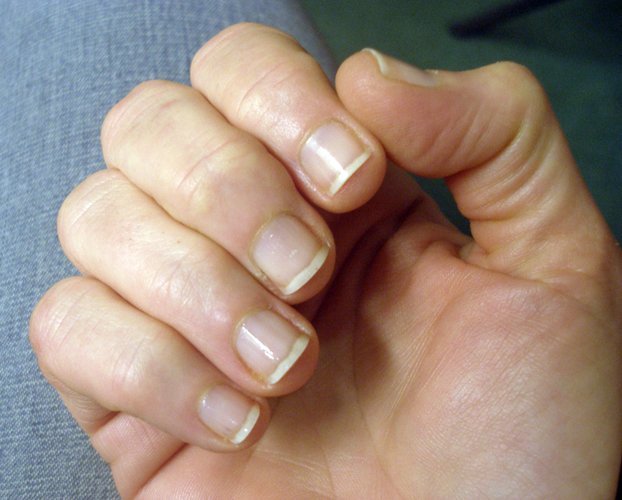
I ran an errand and then I decided to have my nails done. Having them nicely manicured was helpful in order not to bite them (after doing that for fifty years). Although my nails were short, for me they represented a huge, yardstick of self-improvement!

The Vietnamese woman in front of me was very kind. As she sat down to do my nails, I had the awareness that listening to my music might be rude. I pulled out my earbuds as she began to massage my hands.

She stared at my iPod, so I told her how much music had helped me. Then, she began to ask me a few questions. I was completely honest and within a few moments I had told her a lot about my life.

Suddenly, the manicurist lowered her head and tears coursed freely down her cheeks. She told me how much she missed her beloved, brother who had died a year ago. She said he used to play guitar with her and she was very sad.

I held her hand with one hand as she worked on my other hand. I told her that his death was still very raw and her tears were better “out than in.” She got up to get a tissue, and then she thanked me.

I asked her if she wanted to listen to one of my songs. Because I was embarrassed that my singing was too personal – I put on my instrumental song, Farewell. Within a moment, another manicurist came over and the two of them each had one earbud in their ears.

I squirmed a little as they listened. I allowed myself to hear the notes to my “theme song” in my head; I could always hear it playing through me at any given moment.

When the song was over, both women told me how beautiful it was.

I put on another song for her, “Beside Me Always.” I watched her close her eyes as she listened, and tears continued to course down her cheeks.

When she told me my music helped her feel better, I was relieved. I told her I was a writer and I wrote a lot about grief. Because she didn’t understand English too well, she asked me to write down that word for her. I did. She said, “Oh – grief! I see . . .”

I left the nail salon, and knew I’d be back soon to bring a CD over for my “new friend.” I thought about my music and wondered why I wasn’t selling anything yet.

Knowing my music comforted her made me feel alive. It felt so great to give of myself so freely.

Then I thought about her gift to me.

I suddenly gained a lot of confidence about where I was going.

You’ve got to hand it to me! (Boy am I running out of picture ideas)

“Squeezing pain of stress”

My blog, My Journey’s Insight, was started in February of this year.

For anyone first reading this page, the table of contents page has more about me on Post #1.

Currently, I am writing about grief. Sometimes, I write humorous things and I cover many other topics. I am passionate about songwriting and music, for sure.

Before I continue further, let me introduce those whose messages I will soon be sharing.

First off, there is Sam. I reconnected with Sam (who is a physician) this past October. He found my blog and saw his picture on I REMEMBER THE FUN. At that time, I hadn’t seen Sam for over thirty years and he was my boyfriend in high school.

There is also Lori. I wrote about Lori on RECONNECTING & REMEMBERING and I’VE LIVED AMIDST BROKEN HEARTS. We have a mutual relative that connected us after her son died.

I have endured considerable teasing and prodding by some of my tennis friends. Their message to me has been this, “Stop wasting your time emailing your former boyfriend and pay attention to your husband!”

Well, I love my husband, and “my former boyfriend” has been extremely compassionate and helpful in my present life. Our new, friendship has certainly provoked some insightful writing from me. His kindness has been unusual.

This week, I went into the same hospital where my mom was on a respirator last year around this time. A few days ago, I mentioned to all my friends how difficult it was for me to visit my good friend, Janis, whose mother has been extremely ill.

Sam sent me a message and said he could visit Janis and her mother at this hospital, which was nearby to his medical office. I asked Janis if that was okay and she was open to his visit.

Janis told me afterwards that he was extremely attentive and caring. He spent almost an hour of his time giving her advice regarding her mother’s care. She had never met Sam before and was very grateful that he had extended himself to her.

I felt glad, because Janis had always extended herself to me. I will never forget how when my son, Jason, died in 1992 – she was there for me.

On Dec 8, 2010, Sam wrote:

Hi Judy,

Just back from a long downtown meeting…a quick off-the-wall comment on your recent post…you wrote:

“Even when I smiled, I could feel the squeezing pain of stress.”

You wrote a similar line in one of the earlier posts that I read…I just wanted to make sure that you are not having chest pressure or anything like that…when we were 19 and 17 it didn’t matter, but now at 53 and 51…when I hear “squeezing pain of stress” in my peer group, I usually order a treadmill stress test (stress echo actually)

I just want to make sure that you’re not ignoring any of your own health issues while taking care of everyone else! If you have any “squeezing” or “tightness” or “chest burning”, let your doctor know as soon as possible! This is not to worry you, but don’t ignore any significant symptoms!!…Sam

Phew! Thanks, Sam.

I think I meant it more figurative. I’ve been feeling a lot healthier, so I’m actually very sensitive now to those feelings of stress. When my burden is “heavy,” I usually feel the squeezing in my stomach. I have found the effect of stress has been to cause my stomach to be upset, so it’s not really in my chest area.

I have kept up with those mammograms – especially, losing my friend Cheryl gave me the awareness for that.

However, it was so caring of you to write that to me – Thank you.

Judy

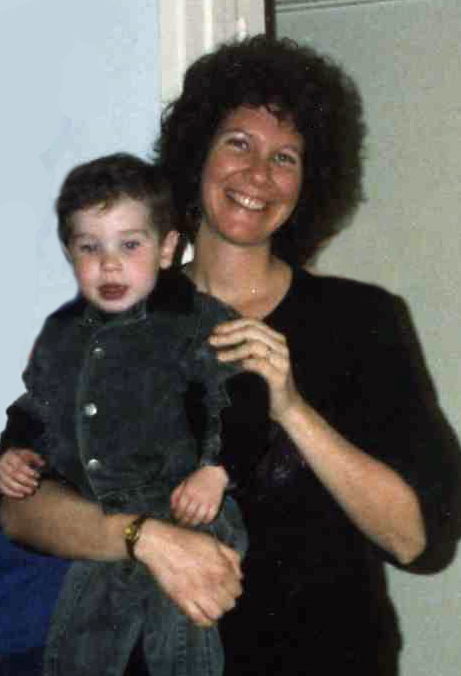
Jason and Judy

“Where am I going with my writing?”

On Dec 6, 2010, Sam wrote:

Hi Judy,

You wrote:I’m actually thinking that perhaps instead of a book about grief I could make the book about releasing my grief through the music.”

You’re at this interesting juncture, and I think the main thing to decide is whether you want to write a book that is therapeutic for you in its writing, or whether you want to write a book that will sell as many copies as possible.  And they will probably not be the same book.

(Sam wrote a lot more; he was extremely helpful with a considerable amount of detail regarding his suggestion)

I think that you can find the proper tone that will be right for you and convey what you want to say…but it will have to be a careful and thoughtful road to get there.  I think you can do it and be very successful…go for it! Sam

A card from one of Jason’s 5-year-old preschool classmates. His death impacted some very young children. My good friend, Janis, says her son no longer remembers Jason now (He is 23).

From: Judy

To: Sam

Sent: Mon, December 6, 2010

Subject: Re: Grief book

I know you’re right about all of this!

I’m so tired from typing today it’s hard to process it. But thanks so much for the encouragement and thoughtfulness. I am thankful that I haven’t gotten any more carpal symptoms, but my wrists do ache a little from all my typing.

I’m going to have a great blog; too bad I can’t sell that!

It’s funny, but I feel like I always say the same things over and over in regards to grief. There are a few “truisms” for me, but generally those are not even my own ideas. They are truths that all the people grieving seem to know. It’s a “club” no one wants to belong to. And honestly, whoever buys the books will probably already know someone or be someone in it!

I read a lot of books back them. I did have one, special book and I remember being impressed that the mother wrote it ten years after her son died. I thought, “Wow, how did she remember all that?” Now I understand.

I guess I was thinking that although I thought I knew a lot of grief and “moving forward” – it was truly this year where I made so much improvement in my life. That’s why I thought it would be a more unusual book than all the other typical, grief books.

It sounds like an outline might actually be a very good idea for me. Thanks so much, Sam. I’m honored that you’ve shared my blog excerpts with med students, too.

Judy

On Dec 9, 2010, Lori wrote:

Hi Judy,

I think Sam has great ideas for you to ponder. I think what is so wonderful about your blog is that you fell deep into grief when Jason died, yet your experiences through that grief have made you who you are today.

A strong woman who can advocate for your children, caregiver for your parents, a singer songwriter, a writer etc…I think what would make your book different from other books is how you not only survived grief, but you came out the other end a very, happy person who rediscovered herself. As you and I both know, no parent wants their dead child to ever be forgotten.

Jason was only in your life for 5 short years, but look at the incredible impact he had on every aspect of your life!

That is exactly what your book would portray and that is what every grieving parent needs to know – that their child will never be forgotten and will always be involved in their life.

Love, Lori

Hi Lori,

Thank you for your touching message! You said exactly what I was thinking of doing. I love the songwriting stuff, although some of my songs are about friendship and stuff unrelated to grief (although Cheryl died).

I know a bio is too much. I thought I’d make it like a “journal of rediscovery” and use my blog excerpts – minus most of the stuff about my kids. I have plenty of material if I go that route.

Or I could just do stuff about grief, and make a smaller book.

Judy, I also love the humorous parts in your blog about your animals! I think everything including your songs should be included in the book somehow, or maybe a CD of your music can be included in the cover of the book.

Love, Lori

Below is a message from a fellow, bereaved mom in a grief forum to another mother named Joanne. Joanne was upset because she did not receive any messages on her child’s death anniversary and planned to “leave this group.” Shasta’s message echoes my sentiments exactly!

From: Shasta

Subject: RE: [Loss of a child] I think I am going to leave this group.

Date: December 10, 2010

Dear Joanne,

First I’m sorry for your loss (the death of your son). Second I’m sorry no one acknowledged it.

It is true that we understand your loss and wish to be there for each other everyday, but we can’t. As it has been said, many of us carry our own grief a burden so heavy that sometimes we stumble and fall beneath it (and often can’t get up). Some of us barely make it through our days, and many of us face other problems with our marriages, jobs, the economy, our living children (and their grief), other losses etc. Many of us will fall behind on many things including checking emails and these groups. I’m not making excuses, you are right there is no reason why anyone should face the anniversary of their child’s death alone! I’m sorry for the way the world is, it isn’t fair, it isn’t right and YOU should never have to face this horrible thing let alone feel like the world didn’t even care to acknowledge it. The truth is NO ONE should.

We were thinking of you on your hard day, I know you can’t read our minds and we need to express it out loud. For not doing so, I apologize.

Long Warm Love Filled hugs, Shasta

It might seem strange with so much sadness, but I’m going to end today’s writing with a short, humorous exchange. Sam and I both like puns:

Hi Sam,

I have a new, lower version of my latest song. Now it’s in a key that’s much better for my voice. Here comes The Alabaster Seashell in the key of C!

Judy

On Dec 6, 2010, Sam wrote:

Glad it’s not the Alabaster Beetle in the key of B…looking forward to hearing it…Sam

Hi Sam,

I had no idea there was so much to know about recording. I’m going to do a lazy vocal right now into my computer mic. Finally, blessedly it’s quiet around here.

I just know the lower key is going to help this song. I guess if this were a Beetle song it would “bug” me!

Judy

On Dec 6, 2010, Sam wrote:

Hey Jude,

I won’t leave you with no reply. That would get me nowhere, man. You’re getting better.  Do you want to know a secret?Just act naturally!

Hi Sam,

Oh god, not Beatles puns!!!!!

HELP!!!!!!

Judy

© Judy Unger and http://www.myjourneysinsight.com 2010. Unauthorized use and/or duplication of this material without express and written permission from this blog’s author and/or owner is strictly prohibited. Excerpts and links may be used, provided that full and clear credit is given to Judy Unger with appropriate and specific direction to the original content.
Posted in Grief Educational | Tagged , , , , , , , , , , , , , , , , , , , , , | Leave a comment