

It took me over a month to gather my thoughts in order to reply to the comment below:
Comment on Post #61 WHAT IS MOST HELPFUL
Judy, you wrote:
“The only people I wanted to be with were those who were grieving too.”
While I know that someone who has not experienced a significant loss can sympathize with someone who has, do you think they can truly empathize? Did you ever find someone who understood what you were going through if they didn’t experience it for themselves? Sam
Hi Sam,
Thank you for your thoughtful comment. I’ve decided it’s worthy of a thoughtful response. I am going to write another post about grief.
Judy
Does true empathy in grief exist?
Empathy is a word that is very close to sympathy. I looked up the definition, and empathy means “the ability to understand and share the feelings of another.”
I have often suggested that it is helpful for people who are grieving to seek out other bereaved people with similar circumstances in order to find understanding of the anguish being experienced.
When I was involved with Compassionate Friends, many bereaved parents complained about the lack of empathy over and over and over again. They were searching for it and not finding it.
I wonder if other bereaved parents would agree with me on what I am about to write.
So here is my truth (and my truth alone because grief is unique to every person):
I have finally decided that my answer is a resounding no, since it was impossible for anyone to comprehend my level of pain after Jason died – even if they had also lost a child!
I hated to write that sentence above. However, it just wasn’t possible for me to find empathy from anyone, even people who had experienced loss in their life!
I really felt no other human could understand the pain of my loss. They had no idea about what I had lost; nor could I about their loss.
Grief is very lonely. I believe it is the most isolating of human experiences.
I have often heard of amputation as an analogy for grief. Like an amputation, it is hard to imagine how it might feel to “lose a limb” unless it is actually cut off. The loss is always there, and eventually one might learn to compensate for it.
The difference is that while an amputation is visible; an amputated soul is not!
Also I believe it is a blessing not to experience deep grief, to not understand. I can certainly remember the innocence of my prior existence. I had an “unblemished heart.”
If I were to imagine losing a second child, I could not even imagine how that might be!
I believe it is completely different to imagine horror than to actually cross the threshold into bereavement. Simply projecting horror is a pittance to the experience. It’s almost like one of those “close calls before a car accident.” You might imagine the thud, breaking windshield, and injury. But until it happens, there is just no description of how it actually feels that adequately matches the horror.
I think that is why it is so frightening for many people. I have heard my friends tell me that losing one of their children is their greatest fear.
With that level of fear, it makes it very hard to approach someone who is grieving!
I remember trying to offer comfort to a woman whose son committed suicide. She told me that there was no way I could understand her situation.
She was right.
It was then when I realized it was truly impossible for me to imagine the grief of someone else. It was especially difficult if the circumstances were suicide or murder!
After Jason died, I searched for another bereaved parent who had lost a child of the same age. I desperately wanted understanding. It didn’t help. I searched for someone who had a cardiac child who had died. I actually came close. It still didn’t help.
My “fellow grievers” did have understanding for many situations which arose as a result of grief, and that was very helpful. They understood what it was like to avoid places where I used to go with Jason. Cleaning out his room, and emptying his closet held tremendous anguish.
Therefore, my “partners in grief” were useful for their “understanding” but could not ease my pain, nor could I feel theirs.
Bereaved people are still humans with unique personalities and what goes along with that. Often, bereaved people have completely, different timetables as they move through their grief.
Experiencing loss can affect and alter personalities. I’ve met bereaved parents who drove others away during the angry phase of bereavement. Grievers are wounded and not much can be expected of them. This can cause them to be further isolated.
Friendship developed over time for me with my “grief partners” at Compassionate Friends.
It was always better for me to not have any expectations of them. Even though I was still “alone with my grief,” it helped me to crawl along with them. We all watched each other eventually begin our “first steps” back into a new existence.
I still felt I had to go it alone. It was not possible for anyone to “pull me up.” When I went to visit my friend Lori, I did not pull her up; she suffered and had to survive one minute at a time on her own.
I was grateful for our friends, Josh and Jeanne, for their companionship. It truly did help Michael and I during our bereavement.
The pain was “what it was,” it couldn’t have been any worse or any easier. Initially, the shock was simply a cushion for the impending anguish.
Although I couldn’t comprehend empathy while grieving, I do believe it is a beautiful thing for another human who has experienced grief to try to comfort someone grieving.
I always appreciated caring and support. Some parents who had children the same age as my deceased son had difficulty facing me. I recognized the courage of those that stayed close with me throughout my ordeal.
As far as what to offer someone grieving, at best, it is simply the statement of “I wish I could do something to help you and I’m so sorry.” That might be the most comfort that can be offered.
As I healed, I started more and more to feel the pain of other’s grief. That was when empathy returned for me personally.
My insight about empathy, therefore, was that what I was unable to find during deep grief came back into my life later on.
The intensity was startling. I felt empathy for people who were suffering even when I knew they could not grasp my sensitivity to their pain!
I have tried to be very honest in writing about my grief.
When I was deeply grieving, I wanted to die because it was so painful. I have never felt that way before or since.
I believe grief is a process. It never ended for me; it only changed.
I truly did not see color in the world; everything was in black and white for years and years.
Sometimes I wonder how I kept on illustrating. I wonder how I continued to parent my living children.
I simply survived. And then one day, I saw color again.
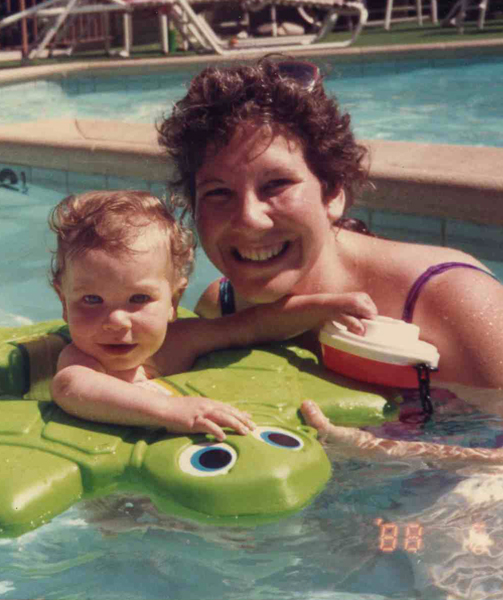
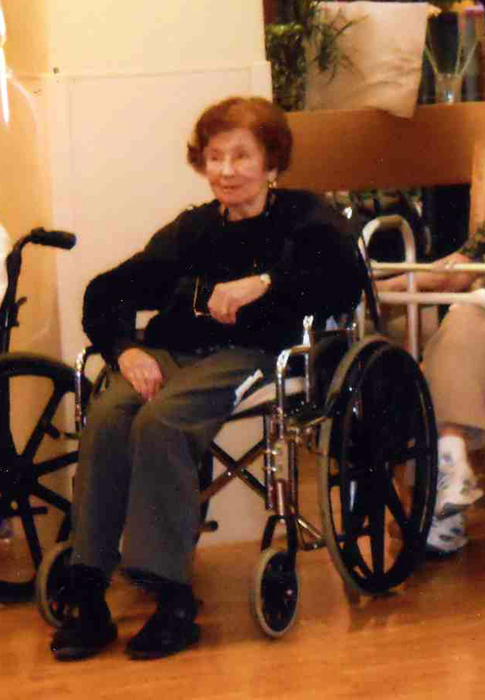
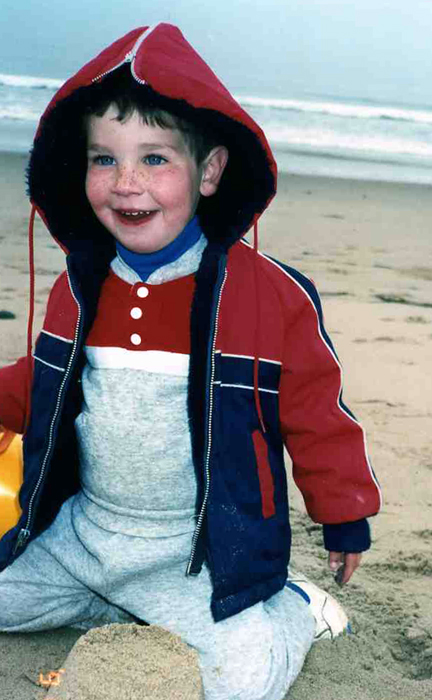
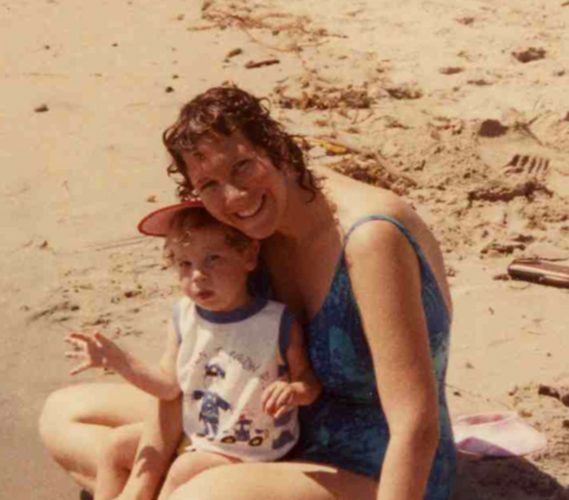
A picture of me from my “prior existence.”
A comment by one of my grief partners, Riva:
I think you stated it beautifully, Judy. For me, the proof that my grief was truly understood hinged on whether people could bring themselves to mention or ask my child’s name. I longed for that, almost as if that simple act gave continuing validity to my missing child and it became my criteria for a true measure of knowing where I was.
Message to a Grief Forum:
Subject: I’m leaving this group!
On Dec 7, 2010, Joanne wrote:
As much as I love everyone here, I just had the 3rd anniversary of my son for being in Heaven. No one acknowledged it. It was a VERY tough day for our whole family…. my heart goes out each and every one of you and I know that heartache too well. It’s too much for me… hugs to you all Joanne
Dear Joanne,
Don’t leave this group!
Everyone who has “anniversaries of the heart” knows it was a tough day for you; yes, they are fellow grievers and should understand! But grief is very lonely, and those “grievers” are incapable of dealing with anything more than their own pain. But they are the closest thing to finding comfort because they might understand the challenges of what you are going through!
There were no intentions to hurt you – so that’s what is important to remember.
In the end, all that is left of Tyler is you and your love of him for the rest of your life. You will always have that and must hold onto that to help you through those difficult days. Although it would have been nice to have acknowledgment, that is never enough anyway. The true pain is that he is gone and no one loved or knew him as you did. He would want you to feel better!!!
My son died 18 years ago and I have never forgotten any of it. I am not telling you how you’ll feel better or when. Someday, I pray you will feel better and understand how beautiful it was that Tyler was in this world and is always with you!
And by the way, it definitely is too much for you! It is awful! There are no words to describe such a loss. I am really sorry.
Judy
Messages from others responding to Joanne’s message in the grief forum:
I am sorry that I didn’t respond. I have Jeremy’s coming up on January 6, 2011. It will be one year. I am hating all holidays and I want to be left alone. Always remember he is there for you no matter what…. Jeremy’s mom, Marcy
I think as time goes on, people tend to forget these days that are burned in our hearts. On Alex’s first birthday after he was gone, our house was filled with people; last year it was just the family. This year, I plan to put it out there. Maybe if you remind everyone they will come next year. We wish we didn’t have to remind them but it is such an important a day for us. Had a second heart attack on Halloween but I did quit smoking…. Alex’s Dad, Larry
I don’t post too much, but I am still here. I lost my daughter 6 years ago. It still hurts like hell. I think of her daily and wish things where different. I wish I could help people in this group. Have a good day all. Judy R
Comment from Sam:
On Dec 7, 2010, Sam wrote:
How terribly isolating it must be…even within the group…is there any way out?…Sam
I believe grief is the most isolating of human experiences.
It is a prison without walls.
Ask any bereaved parent – they’d trade their own life in an instant (rather than live in a torture chamber) if their child could live again.
You might try to imagine losing one of your beloved kids – never to hear or see them grow up. However, it’s unimaginable. It’s like going from thinking about hunger, to never tasting food again.
With time comes acceptance, but the pain is never really is forgotten. It is forever.
Judy
Ps. Sadly, most bereaved parents dream their way out is by believing they’ll see their child once they die. I am in a place of acceptance and I remember the pain clearly but don’t feel it the way I used to.
Message to my friend, Lori (Post #2):
—–Original Message—–
From: Judy
To: Lori
Sent: Wed, Dec 8, 2010
Subject: Matthew’s birthday
Hi Lori,
I couldn’t believe I ran into you at Target the other day. Another one of those amazing coincidences! Especially, since I had just revised the post “I Opened the Box” that morning and read your comment there.
This morning, I was thinking of you. I remembered it was Matthew’s birthday “anniversary of the heart” last week.
Anyway, I just wanted you to know I remembered that. I’ve been thinking about writing something about grief and the holidays. You know, the time where the holidays hurt like hell.
Hope all is well with the rest of your family. It was great seeing you.
Love, Judy
On Dec 8, 2010, Lori wrote:
Hi Judy,
It’s always wonderful to see you too! This year Matthew would have been 17 years old. It’s been 15 years since he died. It’s so unbelievable to me that so many years have passed!
I think your idea to turn your blog into a book is a wonderful idea. I remember early on in my grief, feeling like no one could understand what I was going through except for the people at the Compassionate Friends meetings. It would have been wonderful if a friend, family member, or even my son’s doctor could have handed me a book to read by a mother that has found her way through her grief. It would have been a spark of hope!
I hope you and your family have a wonderful Hanukkah! Keep on writing and singing Judy.
You are truly an inspiration.
Love, Lori

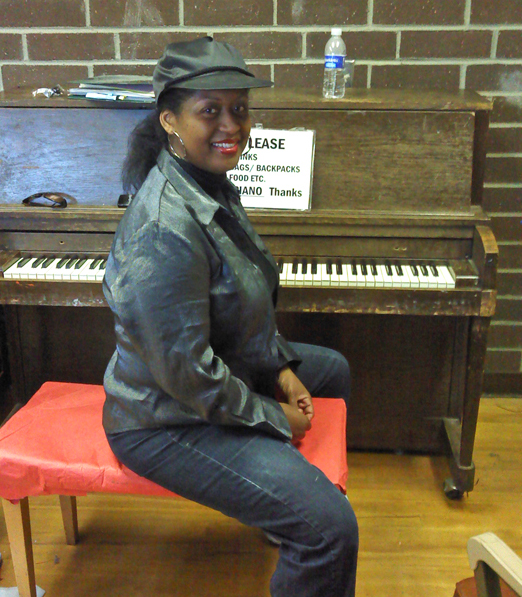
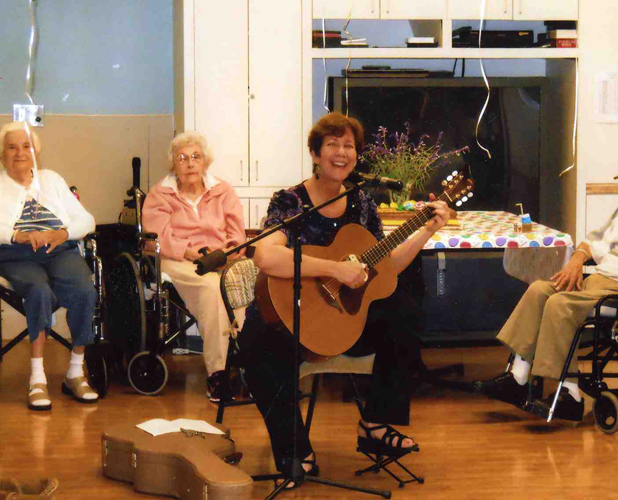
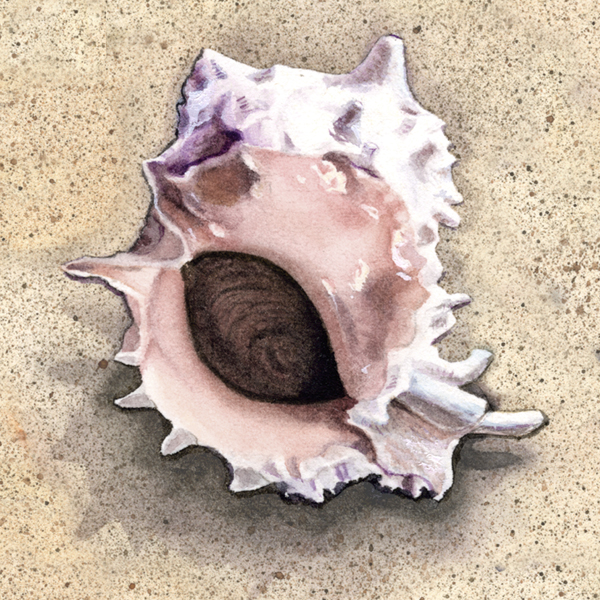
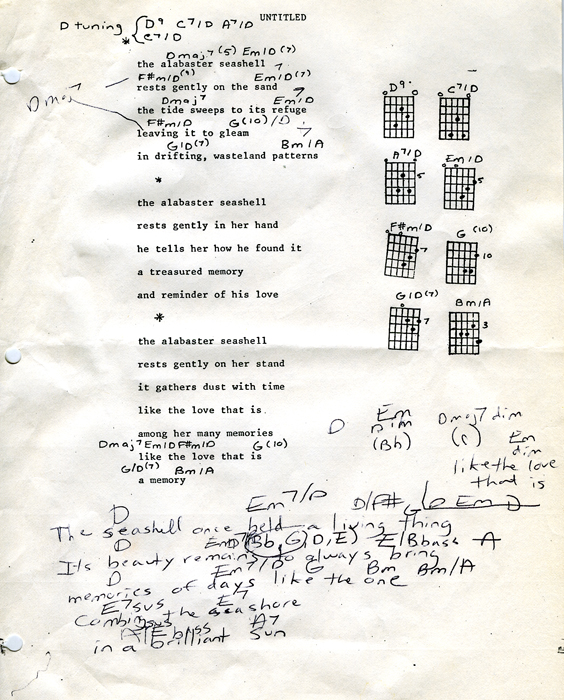
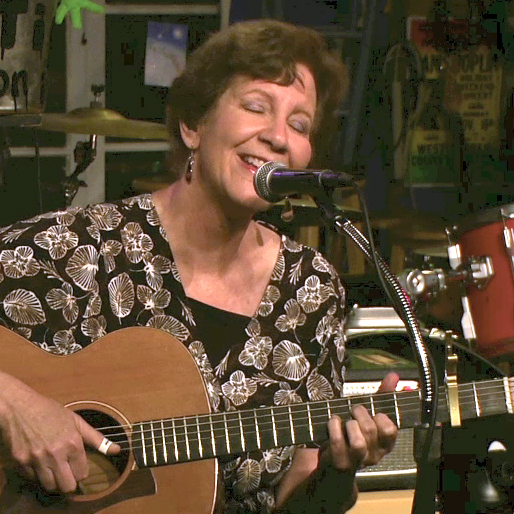
A song that was written before I experienced grief. I wrote this when I was 17.
My last words are to remind everyone that holidays pose a particular challenge to anyone who is grieving.
The loneliness and anguish are intensified with the memories of past holidays filled with joy rather than excruciating sadness.
If you know someone who has lost someone whom they loved, swallow the fear and call them. If they are angry, listen. If they are silent, stay close.
If they are sad, allow it. Don’t feel your purpose is to remind them “life goes on.” They know that. Unfortunately, it is going on around them!
Your presence can mean so much. And if you are “rejected,” don’t take it personally.
Don’t give up either.
Grief is a horrible thing. However, it is part of life and is arbitrary. It can happen to anyone at any time.
That used to be a scary thought for me. It isn’t any more.
That is why I have so much appreciation for my life right now.
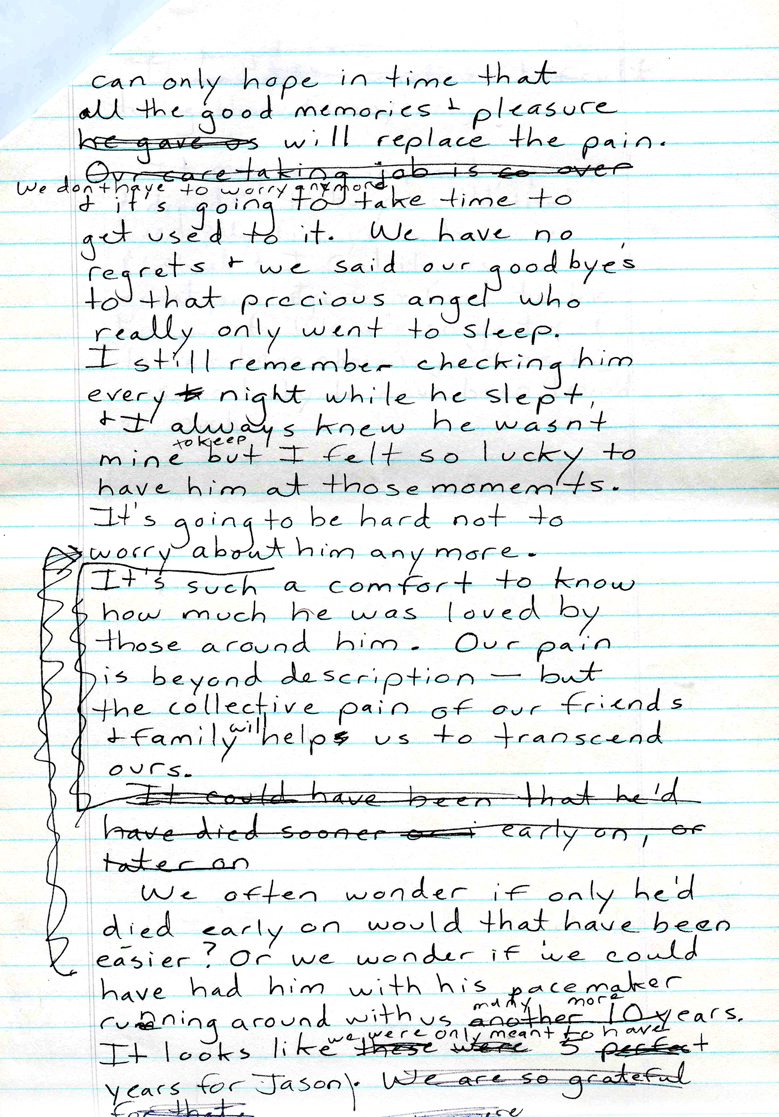
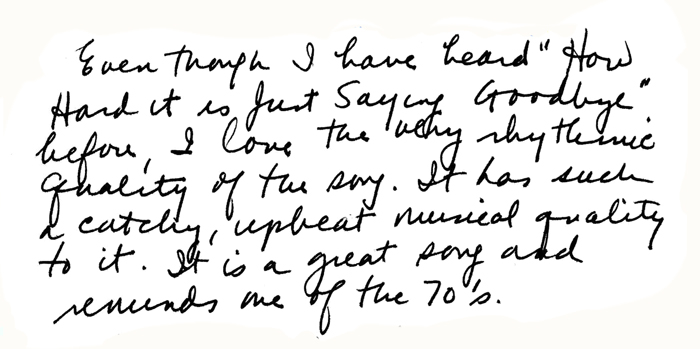
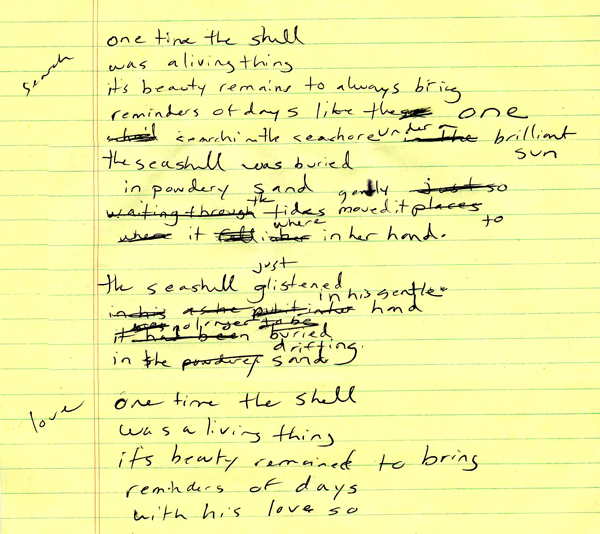
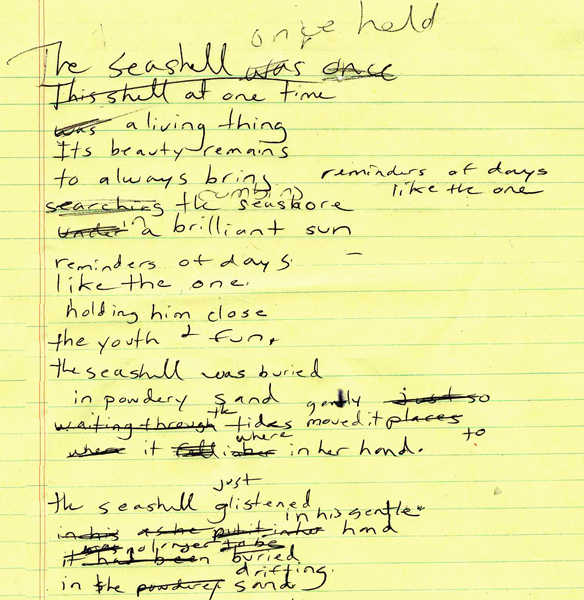
I wrote eleven pages like this in one day. I read it into a tape recorder for Jason’s funeral.
© Judy Unger and http://www.myjourneysinsight.com 2010. Unauthorized use and/or duplication of this material without express and written permission from this blog’s author and/or owner is strictly prohibited. Excerpts and links may be used, provided that full and clear credit is given to Judy Unger with appropriate and specific direction to the original content.















 myjourneysinsight