
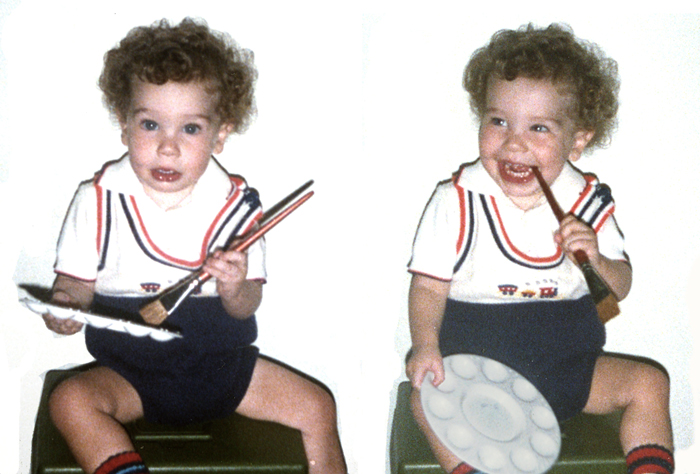
 I am continuing to write more about grief.
I remember grief well, but I am not bleeding anymore.
It is important to share that I do not feel anguished as I write about grief. Eighteen years have gone by since my son died. The agony did subside after ten years. I had no feelings at all for a long time after that – no pain, nor joy.
It was only this year that I discovered joy again.
When I was deeply grieving, I felt no one could understand my pain.
Yesterday, I remembered some lyric lines from my song, “Through My Music.”
“Through my music I forget, all the time I’ve wasted
Waiting for someone to ease my pain inside”
It is fascinating for me that I wrote such eloquent songs about grief before I ever experienced it.
Currently, I believe the world is full of grieving people who are terribly suffering.
For anyone grieving, the fact that I can sing and be joyful again might be unbelievable for them.
It was for me once!
People, who are in deep grief, probably cannot grasp that I grieved as deeply as I did.
It is only now at this juncture that I’ve realized how much I’ve learned through my grief journey. It is far less lonely for me now.
Once again, I speak about grief from my own, personal experience. I have connected with a lot of bereaved people since my loss, and many of them feel the same way and of course, some do not. All people are different.
“An amputation of my soul”
I really could describe my grief as an amputation of my soul.
It was not visible, but it left scars that are there FOREVER. For me, healing is actually an appropriate word to apply to grief. Healing implies a wound, and with wounds there are scars.
With my joy, I have chosen at this juncture to look at my scars in a positive way:
My scars allow me to understand how other people feel who are bleeding.
My scars allow me intense appreciation for my survival.
Through the grief process, I’ve compensated for the missing part of my soul. I adjusted and learned to live with it. It is process that will continue for the rest of my life.
I am writing as a response to a message from my friend, Sam. Here is an excerpt:
“I do think that a strong support system makes a big difference in coping with such a tragedy…it may be that only those that have had a similar loss can truly be supportive…but I am thinking that the support and sensitivity of those that haven’t had a loss of such magnitude is also vital…maybe its the insensitivity of the larger group that creates a need for organizations like Compassionate Friends.”
As far as coping with “insensitivity,” I believe that when I was “bleeding” I was in too much pain to appropriately interpret sensitivity. Simple, well-intentioned statements such as, “time heals,” actually upset me!
I really didn’t encounter too much thoughtlessness. I have always been fairly careful about who I’ve kept in my vicinity.
A “strong, support system” was certainly helpful; there was no doubt about that. But alleviating the pain of grief was not possible for me from any other human. Compassionate Friends existed for me as a place to voice these feelings; it was a place to express the sadness.
In Sam’s message to me, he insisted, “People in the past coped better with losing a child than people in the present; for a myriad of reasons. Here is an excerpt:
“I don’t remember the older members of my family or my wife’s family being burdened with profound sadness. In 1900, 11% of children born in the US died before their first birthday (today it is only 0.7%). Yet I have not seen any stories or writings that indicate that the members of that generation were exceedingly sad or troubled by grief. Maybe it was just a different time…no therapy or drugs, and there was a day-to-day concern for survival. But, I believe that the strong support available in communities that were much closer knit and involved with each other than they are today was really the key difference that made coping with tragedy easier.”
Of course, neither of us truly knows what other people from that past felt. The cliché of “appearances can be deceiving,” definitely applies here for me.
I will explain again why I do not believe that statement.
When my soul was amputated, it was my lifeblood that was pouring out.
If the entire population of this planet came to offer comfort, my lifeblood would have continued to pour from me.
I believe that with the “amputation of my soul” there was truly nothing that could stem the flow!
I have said before that I have lived all of the “stages” of grief. In my depressed stage, I was in bed and under the covers – there was no person who could comfort me there, certainly not my husband!
When I was angry, I didn’t want anyone there to comfort me. I told everyone to “leave me alone.”
My mother was probably my closest comfort. That is one reason why I’ve been so sad about losing her incrementally to dementia.
Once again, I don’t want to stop anyone from offering support or kindness to a friend or relative who is grieving. Other people’s caring was always appreciated!
However, I felt I had to reply to the idea that community support made grief “significantly” easier for humans in the past; that it alleviated their pain. It simply couldn’t alleviate mine.
I actually had tremendous, community support when my son died. We had meals brought to our home for months. I am forever grateful for the support I received.
However, with all of that support, my pain was still intense!
I wrote the words that a bereaved mother once told me it took her “seven years for her agony to subside.”
I highly suspect that intense, community support could possibly last that long.
There are also many people who are like my husband. He did not want community members “hanging around” for support. He did not want to talk about his grief, nor discuss it with anyone!
He did not want to be in a support group!
He was still scarred by his grief, but never speaks of it. Therefore, anyone who might meet him could say, “Wow, he has coped well!”
He may appear to have coped well, but his grief journey was as lonely as mine – even though I sought out support.
For these reasons, I do not believe grief was any different for anyone in any period of human history.
My discussion with Sam continued:
On Dec 14, 2010, Sam wrote:
Judy,
In 1900, 1 out of 8 women died during childbirth (at some point in their lives). So, there was much more death that was experienced by an individual…and I think, based on what you have written, that you would expect that the grief in most communities would have been unimaginable. And you point out that there was probably more stoicism, more silence. But you would think that somewhere in our relatively recent history, such grief would have been documented in stories, theatre or music.
But, I don’t remember seeing or learning anything about it…maybe its there and I’m just unaware of it…but I really think there must have been a fundamental difference in how grief was experienced a century ago, and I think it is directly related to societal differences, including more religiosity, obligation, and sense of support within the community. I believe that grief experiences have changed throughout our history, and the reason I keep coming back to this, is perhaps we can learn something from the past that we can apply to supporting those who are presently in need.
…Sam
My reply:
Hi Sam,
I wrote a lot about this yesterday. It was actually very thought provoking for me. I do not want to appear arrogant. I have to admit, I felt like I had a better perspective on this as a bereaved parent. But I readily admit that I have not researched this or even looked to see what people have written about grief and loss in the past. So actually, I am not qualified to address this at all!
However, even reading what you wrote just now, still does not have me convinced. If I could summarize my feelings it would be this:
I believe what you are expressing is that people coped better because they were better prepared. Death was a part of life and therefore, grief was something that was easier because it was familiar and everyone was supportive.
Here is my personal, view as a parent whose child died.
I have met bereaved parents who were religious and non-religious. They all have suffered!
I knew my child was very sick. I knew he wouldn’t live a long life. I was prepared to lose him so many times and again when I scheduled his surgery. In the past, perhaps it was expected to lose children. Well, I fully expected to lose mine. (This was intuitive; I never expressed it and tried to be positive). I was also in a cardiac child support group. Did it help me to see how other people coped with their child’s death? Not really.
So with all that preparation and knowledge that I would lose my child ahead of time, I was not prepared to deal with my grief. I don’t believe it helped me cope one iota better.
Yes it’s true; medical science made it harder by giving me hope. It might appear that it would have been easier for me if my child had died at birth. I used to think that way, but now I realize that it still would have been terribly painful (as many grieving parents would attest to).
When I’ve dealt with bereaved parents who experienced the “sudden death” of their child – it made me appreciate my time to “say goodbye” to my child, although I hated the disease.
I cannot imagine that if I were born hundreds of years ago without the benefit of medical science that I would have felt differently about this.
I remember elderly, wise and experienced, bereaved people trying to comfort me.
Once again, this is not just about death or medicine. This is about losing a piece of your soul when you say goodbye to someone you love forever.
I am not unusual. I don’t want to be a “poster child for grievers,” just because I have met so many people like myself.
Of course, I wouldn’t know about those people from centuries ago. But I know they were human, too.
Judy
Sam’s message included this:
“I think that there are quantitative differences in grief. Even though you don’t like to compare, the anguish that people who have lost a child have experienced is far greater than what I have seen in the many patients and friends that have lost a parent.”
Yes, It could be true that the loss of a child creates more anguish. I can hardly believe what I am going to write below, because I used to be the most “grief centric” person on earth!
However, because I have seen a lot of anguish from other, grieving people – that statement is completely unimportant for me now.
I have witnessed tremendous anguish even if it wasn’t as “debilitating” as the loss of my child.
I have met a lot of siblings and grandparents who have suffered terrible losses. I have a good friend who still suffers over the loss of her life partner and another friend still mourning her mother. It might be many years later, but their lives are forever altered.
Their grief was also about an amputation to their soul and left scars.
There simply is no point for me anymore to imagine that my grief is deeper than theirs.
Grief is real, painful and very lonely.
Here are my truths:
There will sometimes be thoughtless remarks made by those who “don’t understand” what grief feels like.
There will often be kind, compassionate gestures made by those who want to understand and to help.
But in the end, grief is probably the loneliest journey a human faces when they lose someone they love.
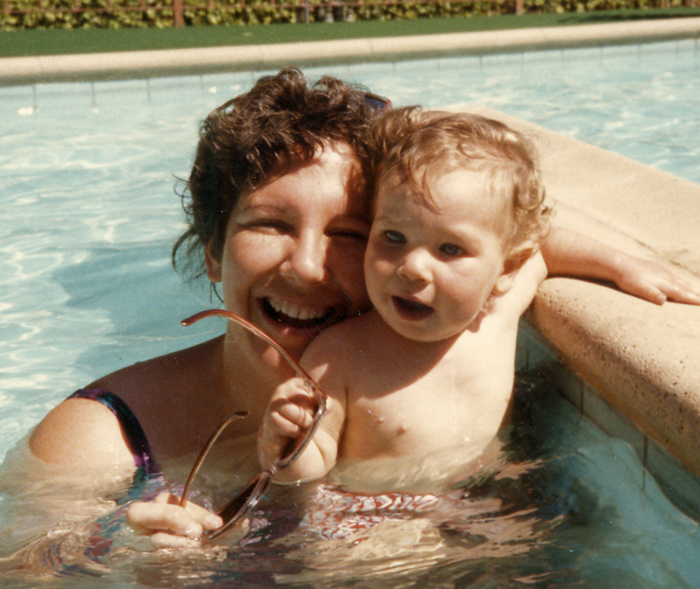 I am going to share the window into the amputation of my soul with the words I wrote after my first and second year of bereavement. Below is a transcription from my original writing:
Thoughts About My Son One Year Later
Facing the one-year anniversary of my firstborn son’s death is like
having my heart broken all over again. Throughout this year, ever so slowly, I’ve tried to pick up the pieces — wondering how I’d live the rest of my life with a heart broken in so many places. My little freckle faced boy named Jason was the most precious thing that could have been taken from me.
Sometimes, I envision a parable to describe the horror. I once lived in innocence & I was rich beyond belief because I had a precious jewel. I polished & took such good care of it until the day it was stolen from me. Now, although I’ve been entrusted to care for other precious jewels, I no longer am relaxed to polish & care for them. As valuable as they are to me, I now live in constant fear that they too will be taken. How I wish I could feel innocent again!
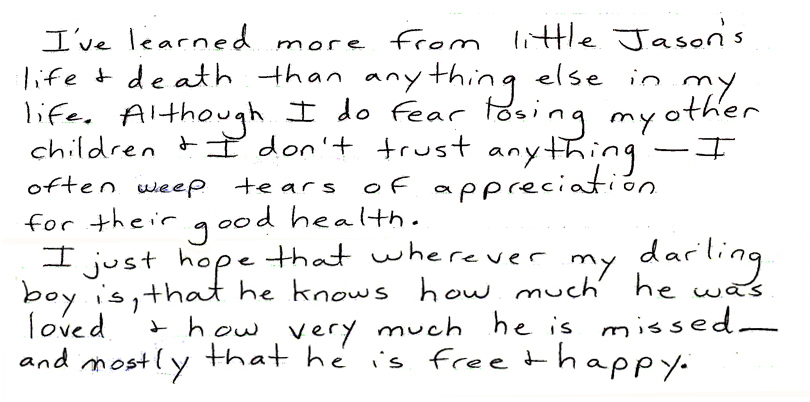
I’ve learned more from little Jason’s life & death than anything else in my life. Although I do fear losing my other children & I don’t trust anything — I often weep tears of appreciation for their good health.
I just hope that wherever my darling boy is, that he knows how much he was loved & how very much he is missed — and mostly that he is free & happy.
Thoughts About My Son Two Years Later
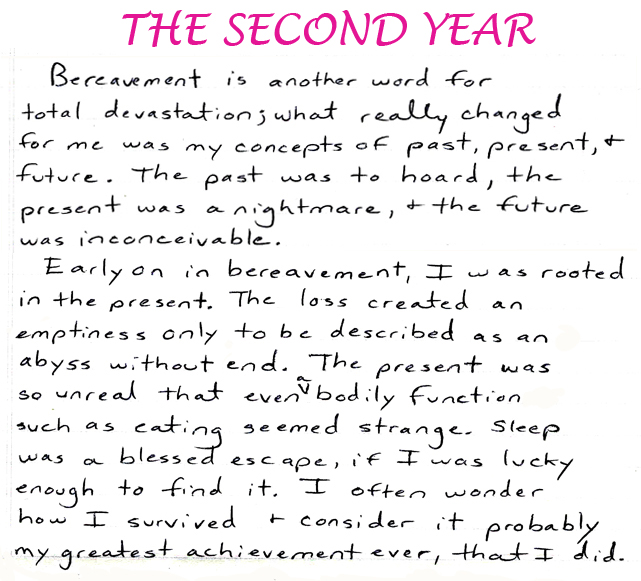
Bereavement is another word for total devastation; what really changed for me was my concepts of past, present, & future. The past was to hoard, the present was a nightmare, & the future
was inconceivable.
Early on in bereavement, I was rooted in the present. The loss created an emptiness only to be described as an abyss without end. The present was so unreal that even bodily function such as eating seemed strange. Sleep was a blessed escape, if I was lucky enough to find it. I often wonder how I survived & consider it probably my greatest achievement ever, that I did.
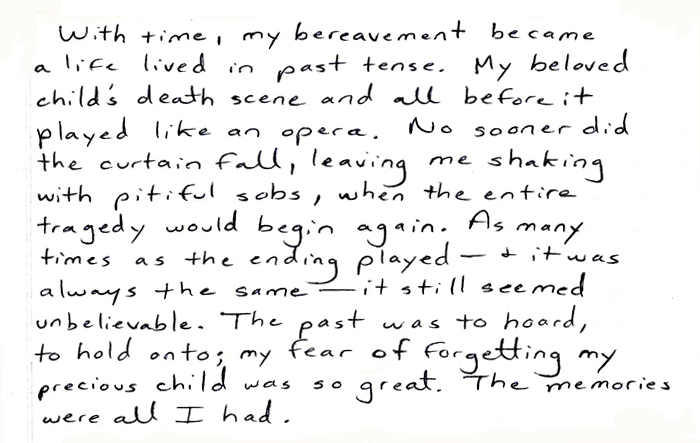
With time, my bereavement became a life lived in past tense. My beloved child’s death scene and all before it played like an opera. No sooner did the curtain fall, leaving me shaking with pitiful sobs, when the entire tragedy would begin again. As many times as the ending played — & it was always the same — it still seemed unbelievable. The past was to hoard, to hold onto; my fear of forgetting my precious child was so great. The memories were all I had.
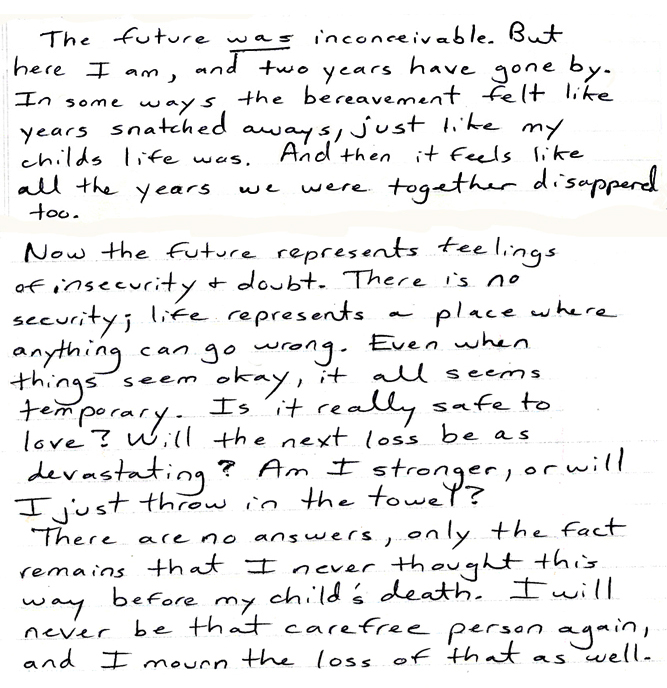
The future was inconceivable. But here I am, and two years have gone by. In some ways the bereavement felt like years snatched away, just like my child’s life was. And then it feels like all the years we were together disappeared, too.
Now the future represents feelings of insecurity & doubt. There is no security; life represents a place where anything can go wrong. Even when things seem okay, it all seems temporary. Is it really safe to love? Will the next loss be as devastating? Am I stronger, or will I just throw in the towel? There are no answers, only the fact remains that I never thought this way before my child’s death. I will never be that carefree person again, and I mourn the loss of that as well. 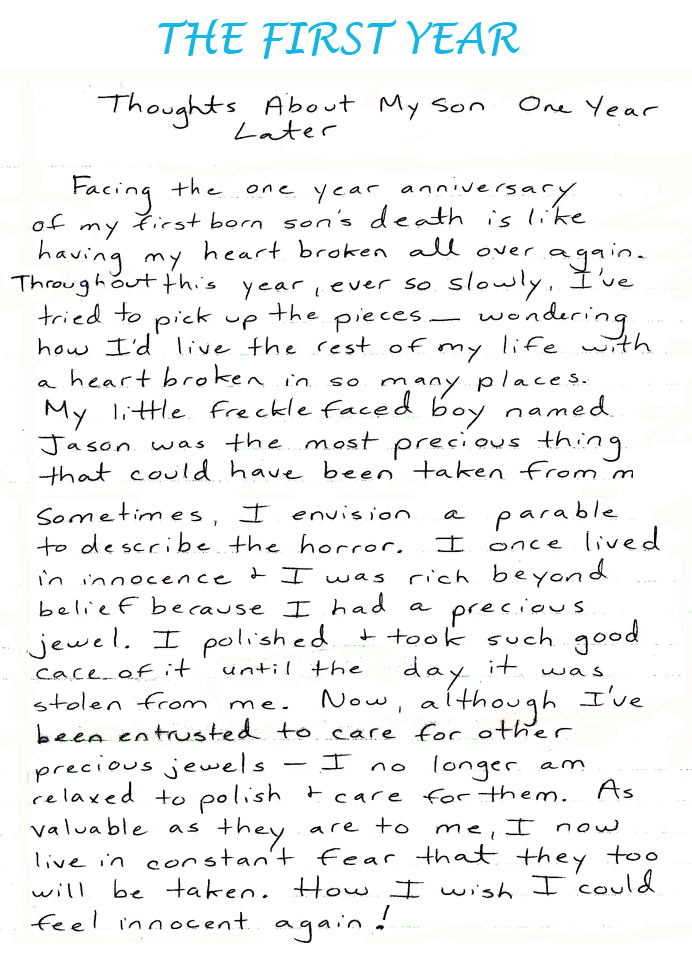
 © Judy Unger and http://www.myjourneysinsight.com 2010. Unauthorized use and/or duplication of this material without express and written permission from this blog’s author and/or owner is strictly prohibited. Excerpts and links may be used, provided that full and clear credit is given to Judy Unger with appropriate and specific direction to the original content.




 myjourneysinsight